Wednesday, September 08, 2004

Woolly Mammoth? Limping Gazelle? Vulnerable Communities of Practice

Susan Smith Nash, Ph.D.
Without good distributed communities of practice, even the best e-learning program can degenerate as ID's, SME's, IT, instructors, and support services speak "at" each other or ignore each other altogether; policies and practices are mired down in the past; and the institution feels itself being chewed upon by the competition. Granted, communities of practice in a distributed environment have a different look and feel than those that are forged in small groups in face-to-face settings. Nevertheless, they are vital if ongoing e-learning products and programs are to be developed, nurtured, and sustained. The main pillars of success -- communication, reasonable and well-coordinated change, relevant tasks and outcomes, shared vision and mission, needs-responsive and ever-evolving instructional and developmental strategies -- will collapse.

While this article focuses primarily on higher education, particularly those upgrading their systems and incorporating new SCORM-compliant learning management systems that integrate with multiple databases and platforms, it can also be applied to military contractors, not-for-profits, and corporations requiring flexibility and rapid responses to quickly changing needs.

Are you doomed to being a Woolly Mammoth in La Brea Tar Pits or a limping gazelle on the Serengeti Plain? Do not be mired in the past or devoured by the competition. Develop functional distributed CoPs.

What does a distributed community of practice look like in e-learning?

As in the case of typical communities of practice (CoP), the group members work together on many projects over time. They may not be on site together. However, they do communicate via e-mail, chat, project management interfaces, and collaboration tools.

Subject Matter Experts: Sometimes institutions use a subject matter expert to develop a single course. This is not always a good idea, particularly if one wishes to have an effective CoP develop over time. Ideally, a core of subject matter experts cooperate over time, and concern themselves with more content-integrative issues such as effective instructional strategy and emerging technologies.


Instructional Designers: Instructional designers are a vital part of the CoP. Their role can be a vexed one, however, if they do not have direct communication with the other members of the team, and do not adhere to a philosophy that encourages constant adaptation and modification to meet changing needs and challenges, they can be perceived as dictatorial, rigid, obstructive, out of date, or simply irrelevant.

Instructional Design Assistants: This is often the most overlooked piece in a CoP. It is important to have long-term, committed assistants who view their work as an apprenticeship and who are committed to keeping up-to-date with new versions of technologies as well as new and evolving approaches, such as video game-based simulation integrated into a conventional e-learning course.

Information Technology Team (includes Learning Object Coordinator): SCORM compliancy is more important vital than ever as learning objects must work across platforms and course management systems. Learning objects must be flexible enough to be shared in multiple applications, and a clear way of organizing access (files, server space, etc.) must be established at the outset and communicated clearly in order to avoid chaos, and to accommodate expansion in the future. Learning objects, properly classified and organized, should migrate easily with expansions and uploads. This may sound trivial, but anyone who has experienced a portal or system upgrade knows that it is not. All the course management system design, portal design, learning object development, etc. are for naught if the objects they employ are scattered randomly through different folders and on different servers.

Project Manager: The project manager should have a clear sense of the big picture as well as the details, and should be able to classify them into hierarchies. Project managers who cannot differentiate forest from trees are not helpful to their team, and will essentially drive a wedge in an emerging CoP. They should be able to guide the group by developing effective project management approaches that mesh with the culture of the organization. For example, a simple GANTT chart or Critical Path can help individuals set milestones and organize work.

Facilitators (Instructors): The instructors are often overlooked in the development of a Community of Practice. Although they should be required to participate in training and to be familiar with instructional Best Practices, as well as cognizant of effective instructional strategies, they are often kept on the periphery, and are marginalized, often for control issues. Their feedback is vital, however, particularly in terms of maintaining an evolutionary stance to instructional strategies, and reporting on the effectiveness of learning objects.

PILLARS OF SUCCESS

Communication: Good project coordination must occur, not only in developing new courses, but in maintaining and upgrading old ones. Communication flows are most effective when they are linear, but when they are also coordinated by a project manager. E-mail is useful, although a discussion forum and a collaboration space are critical, particularly in sharing the results of evaluations, needs assessments, and making curriculum modifications. It is also important to keep everyone on task with milestones and deadlines. Although software such as Microsoft Project is ideal, it is possible to take a simple approach and use a Microsoft Excel spreadsheet to show groups and tasks, milestones, target and completion dates, areas of responsibility, etc.

Reasonable and Well-Coordinated Change: Major changes of hardware, software, curriculum, support services, calendars, etc. are potentially catastrophic if not well planned. They MUST INCLUDE CONTINGENCY PLANS AND INCORPORATE REDUNDANCY. I don't like writing in ALL CAPS, but how many times does one have to go through launch melt-downs, where the course management system fails with no back-up, or servers collapse with no plan for load-sharing, or "edge" computing (as offered by Akamai and others). Avoid *clustered change* and move toward a smooth, transitional change, that involves JUST ONE MAJOR CHANGE AT A TIME. (Oops. Looks like my hand slipped and I typed LOUD again.)

Shared and Understood Mission and Vision: Occasional reality checks should be made to make sure that all members of the distributed Community of Practice know the appearance of the animal they are feeding, training, nurturing, or getting bitten by. At least once per year, the individual members in the CoP should write (and share / post) a paragraph or two on "What Our Mission Means to Me" and "How I Envision Our Vision." This is a great way to share ideas, build esprit de corps, and to gently correct misconceptions.

Needs-Adjusted Content and Curriculum: Competition is alive and well, especially now among colleges, universities and not-for-profits. The institution of higher learning that does not adapt will eventually starve to death, or become trapped in old attitudes, technology, and course content. Think of a Woolly Mammoth in La Brea Tarpits. That will be you if you refuse to find out not only what your clients (students) want today, but what they anticipate needing tomorrow. Remember, slow starvation is an ugly way to go.

Evolving Instructional Strategies and Design: Now let's move from the Tar Pit to the Serengeti Plain. You've seen the speedy cheetah catch the limping gazelle or zebra, right? The race goes to the swift, of course. The not-so-swift get eaten. Let's think strategy, too, though. Instructional design is not just about quick evolution, or being the first on the block to have the latest bell or whistle. It's also about being cost-effective, and thinking ahead to likely scenarios that allow you to seize the opportunities as they present themselves.

Last year, I spent 2 weeks in Mozambique. One weekend, we went to a game preserve that had been fairly wiped out by the 30 years of civil war that had raged within the game preserve, which was located near the border of Mozambique and Zimbabwe. Now, there were very few animals, but the animals that were left were smart and hungry. Apparently, tourists made an easy meal -- either those foolish enough to stand up on the back of open-air Range Rovers, who were picked off by fast, young lions, or those who camped in flimsy canvas tents far from fires, who were mauled by a lioness who was too old to run and catch a Range Rover (but patient enough to wait for the tourists to climb into their "happy meal" canvas meal-to-go bag!). I like to think of Project Managers as wise lionesses. We observe the behavior of the competition, without running after it and putting ourselves at risk. Then, when the moon is full, and the tourists are zipped up tight in their little microcosmic utopias, we open our jaws, let out our claws, and chomp-chomp, it's all over! (My cats love hearing me tell this tale).

Needs-Responsive Infrastructure and Delivery: Why try to push a delivery system on a public that can't use it? It seems obvious enough that this is patently absurd, but people do it all the time. Blackboard immediately comes to mind. It can't deliver video game-based simulation (which many people want), it can't accommodate a lot of traffic, and it can't be modified. Further, firewalls and security do not allow one to log on, or for all the graphics to load. One would be better off to move to a different platform, or scrap the platform altogether for the delivery of content, and use Blackboard only for its integrated gradebook, e-mail, discussion board, contact info, etc. functions. Nevertheless, rigid and inflexible policies and protocols preclude innovation -- even if it is a dirt-cheap option, and it responds to the real needs of the learners, and reflects real-world conditions.

CREATING THE CoPs

The following points can assist in creating distributed communities of practice for e-learning programs:

* Control of learning is distributed among the participants (e.g. students and instructors) and does not rest in the hands of a single subject matter expert or instructor.

* Learning activities are flexible, and modifications are encouraged if they suit the needs of the learner and the group as a whole.

*Multiple parties interact and they are united by a shared goal, problem or project, which provides a mission, vision, and focus. Incentives - both intrinsic and extrinsic - are incorporated into the learning environment in order to motivate learners.

*Learners and Facilitators are committed to the sharing of knowledge, and to encouraging the generation of new knowledge.

*Multiple perspectives and alternative explanations are not only encouraged, but required of learners and facilitators.

* Investigations and inquiries cross traditional disciplinary boundaries.

*Conceptual and intellectual risk-taking is encouraged and rewarded.

*Instructors should model intellectual risk-taking and innovative approaches to problem-solving.

*Instructional designers utilize appropriate instructional technology in order to actualize the development of a community of practice. In most instances, the activities will be structured around and within a course management system, which both foments and constricts the construction of a flexible learning space.

Nevertheless, the following strategies should be accommodated (Collins, 1991) and Nardi (1996):

Collaboration and Social Negotiation: Encourage the members to collaborate on projects. The project manager can facilitate this, and determine the most effective approach. Sometimes collaborative software is vital. At other times, simply using a blog can help encourage thinking and responding to ideas.

Exploration: A community of practice that does not encourage exploration -- both of curriculum (content) and new techniques (software and hardware) will quickly find that individuals will lose interest, and the e-learning courses will flounder. A word of caution, though -- one needs to be aware of who and what is driving change. If changes are made by the IT side of things without explaining the benefits to the others, or without getting their buy-in, large-scale failures are likely. Too-frequent change is as demotivating as no change at all.

Problem-Solving: Collaborative problem solving is perhaps one of the most immediate benefits of effective CoPs. Problem-solving can be technically focused, or can revolve around curriculum. For maximum effectiveness, however, it is vital to pay attention to marketing and outreach in order to maintain an awareness of the emerging and evolving needs of students.

Reflective Thinking: If a desired learning outcome includes the development of reflective thinking, then it is important that each member of the CoP contemplate how they can play a role in achieving the goal. For example, facilitators can think of ways to interact with learners to encourage reflective thinking. Instructional designers can think of activities. SMEs can bring new readings and content to bear. Instructional technologists can develop new applications of technologies -- simulations, etc.

The most effective instructional strategies analyze the desired objectives and then frame them in terms of the learning outcomes. Appropriate approaches keep the technology in the background, and foreground the cognitive processes at work.


References
C. van Winkelen. Inter-Organizational Communities of Practice. http://www.elearningeuropa.info/doc.php?id=1483&lng=1&doclng=1

Resources from van Winkelen

1. Hubert, C., B. Newhouse, and W. Vestal, Building and Sustaining Communities of Practice. in Next-Generation Knowledge Management: Enabling Business Processes. 2001. Houston, USA.

2. van Winkelen, C. and P. Ramsell, Building Effective Communities. in Henley Knowledge Management Forum Second Annual Conference. 2002. Henley Management College.

3. Wenger, E. and W. Snyder, Communities of Practice: The Organizational Frontier. Harvard Business Review, 2000. 78(1): p. 139-145.

4. Gongla, P. and C. Rizzuto, Evolving Communities of Practice: IBM Global Services Experience. IBM Systems Journal, 2001. 40(4): p. 842-862.

5. Wenger, E., R. McDermott, and W. Snyder, Cultivating Communities of Practice. 2002: Harvard Business School Press.

6. Wenger, E., R. McDermott, and W.M. Snyder, Cultivating Communities of Practice. 2002, Boston, Mass: Harvard Business School Publishing.

7. Lawrence, T., N. Philips, and C. Hardy, Watching whale watching. Exploring the discursive foundations of collaborative relationships. Journal of Applied Behavioural Science, 1999. 35(4): p. 479-502.

8. Miles, R., C. Snow, and G. Miles, The Future.org. Long Range Planning, 2000. 33(3): p. 300-321.

9. Ashby, W.R., An Introduction to Cybernetics. 1956, London: Chapman and Hall.

10. Park, S.H. and G.T. Ungson, Interfirm rivalry and managerial complexity. Organization Science, 2001. 12(1): p. 37-53.

11. Johnson, G. and K. Scholes, Exploring Corporate Strategy. Sixth Edition. 2002, Harlow: Pearson Education Ltd.

12. Inkpen, A.C., Learning, knowledge acquisition and strategic alliances. European Management Journal, 1998. 16(2): p. 223-229.

13. LaPorte, B., Knowledge is currency at the World Bank. KM Review, 2002. 5(5): p. 10-13.

14. Skapinker, M., The Change Agenda. 2002, CIPD: London.

15. Boisot, M.H., Knowledge Assets; Securing Competitive Advantage in the Knowledge Economy. 1998, Oxford: Oxford University Press.

16. McKenzie, J. and C. van Winkelen, Understanding the Knowledgeable Organization: Nurturing Knowledge Competence. (Forthcoming). 2003, London: Thomson Learning.

17. Kwiecien, S. and D. Wolford, Gaining real value through best-practice replication. Knowledge Management Review, 2001. 4(1): p. 12-15.

18. Stewart, T.A., Intellectual Capital: The New Wealth of Organizations. 1997, New York: Doubleday.

19. van Winkelen, C. and P. Ramsell, Aligning value is key to designing communities. Knowledge Management Review, 2003. 5(6): p. 20-23.

20. Owens, D. and E. Thompson, Fusing learning and knowledge at the St. Paul Companies. Knowledge Management Review, 2001. 4(3): p. 24-29.

21. Braun, P., Digital knowledge networks: Linking communities of practice with innovation. Journal of Business Strategies, 2002. 19(1): p. 43-54.

22. Adler, P.S. and S.-W. Kwon, Social Capital; Prospects for a new concept. Academy of Management Review, 2002. 27(1): p. 17-40.

23. Lesser, E. and K. Everest, Using Communities of Practice to Manage Intellectual Capital. Ivey Business Journal, 2001. 65(4): p. 37-41.

24. Botkin, H. and C. Seeley, The Knowledge Management Manifesto: Why KM requires community-building. Knowledge Management Review, 2001. 3(6): p. 16-21.

25. Tosey, P., The peer learning community: a contextual design for learning? Management Decision, 1999. 37(5): p. 403-410.


**** Crag Hill --
http://scorecard.typepad.com/crag_hills_poetry_score/2004/08/genre_bender_su.html


Tuesday, September 07, 2004


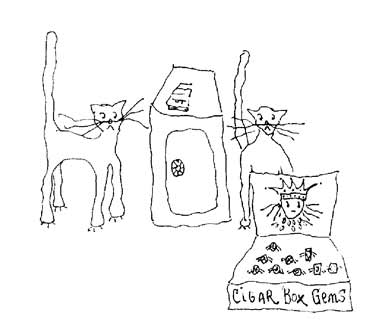
E-Learning Queen's instructionally designing cats have become temporarily distracted by the bling-bling of simulation (okay, it's cubic zirconia & not Full Spectrum Command), but hey, they're seriously *styling* ... now, if they'd just get back to their workstations (!) Posted by Hello

Saturday, September 04, 2004

Tom Clancy’s Splinter Cell Game and Geopolitical Brinksmanship (an Online Course)

Susan Smith Nash

In a move I thought would be evocative of business or industrial engineering courses that use multiplayer games to simulate market and product competition environments, I decided to integrate an Xbox video game, Tom Clancy's Splinter Cell, into an online International Relations course, "Geopolitical Brinksmanship." It required a shift of instructional strategy, and it became necessary to clearly define various roles. Little did I suspect that the approach have more in common with the way that the military utilizes games such as Full Spectrum Warrior to familiarize individuals with conditions they may face in battle. It also is reminiscent of how such games help individuals begin to be able to envision scenarios, the potential players, and possible lines of action.

In developing an instructional strategy to achieve course objectives, it was necessary to determine whether or not students should engage in Role-play or Goal-Based simulations. Briefly speaking, a Role-play simulation allows students to enact situations in a safe and supportive environment. Goal-based simulations involve role play, but the focus is less on the context, the people, and their highly customizable behaviors and responses, and more on successfully bringing about incidents or activities that lead to desired end. The "end" of a role-play simulation can occur when time is up. There do not have to be winners or losers. The winning is in the depth, breadth, and relevancy of the interactivity. In contrast, in Goal-based simulations, there are clear winners and losers. For example, winners are those who liberate hostages, destroy documents, secure buildings, and bring back money.

Role-Play Simulations: For the purposes of the course, role-play simulations are more relevant than goal-based ones. Although rescuing hostages, securing the embassy, and destroying top-secret documentation helps motivate students and propels the story forward, it is not the ultimate outcome. The goal is to become familiar with a wide range of issues, which involve national security, political action, economic development, natural resources management, international relations, and psychology. The role-splay simulation environment encourages risk-taking and innovation, as well as built-in "rewards" for creatively approaching issues in order to encourage other participants to "stretch" in their roles. Role-Play simulation, as Albert Ip has pointed out, does not require icons or a graphical interface. It can be totally text-based, which offers certain advantages when flexibility is required.

Goal-Based Simulations: Goal-based simulation also rewards creativity and innovative thinking, but in a way that is more action-oriented (toward an object or series of objects) rather than toward people.

The objective of the course is to develop help learners develop creative problem-solving strategies; the tactics involved working through a series of scenarios in an entertaining and relevant context. Although Tom Clancy's Splinter Cell: Pandora Tomorrow is a shooter game, the fact that it is a multi-player as well as a single-player game reinforces the notion "shooting" is part of the game's "grammar." Shooting is a metaphor for communication; it is a way to involve the non-verbal in an environment (online) that tends to be highly restricted in its communication options. The graphics encourage the players to envision themselves in a certain time and place, and the fantasy-building aspect encourages individuals to not think of themselves as limited by real-world constraints. Although there is a definite down-side to fantasy and the attendant problems of invincibility, when one is trying to encourage unlimited "box-less" thinking, the video game can be absolutely liberating.

Integrative Instructional Strategy:
In order for this to be useful for learners, an instructional strategy needed to be implemented, which included the following:

1---Background reading on the geopolitical issues, general international relations and political science theory, new tactics and equipment
2---Clear descriptions of problems to be solved
3---Suggested problem-solving approaches, ideally collaborative, and using a worksheet so that people can compare approaches
4---A discussion board to post ideas and to share approaches
5---Collaborations / team papers; facilitator has to assign roles; each role has a separate task to then bring back to the group.
6---Synthesizing tasks at milestone points. Short papers that reflect upon what has been accomplished, and which report the innovative approaches used in problem-solving are useful.
7---Diagnostic self-assessments. Reflecting upon successes and less that useful strategies is very useful, particularly in scaffolding, and developing approaches to be used to build on previous knowledge.

The Game:The website describes the scenario in this way:
2006: The U.S. installs a temporary military base on East Timor to train the developing defense force of the "world's youngest democracy." Resistance to the U.S. military presence in Southeast Asia is widespread and passionate, but the threat Indonesian militias pose to East Timorese democracy is deemed sufficient justification. At the same time, the U.S. doesn't mind having an excuse to install active military personnel within easy reach of both North Korea and the largest Muslim population in Asia.

Anti-U.S. resentment comes to a head under the leadership of guerrilla militia leader Suhadi Sadono, acting with the unofficial support of major corrupt factions of the Indonesian government. Suhadi's men attack and occupy the U.S. Embassy in Jakarta, taking dozens of civilian and military personnel hostage.

You are Sam Fisher. You're sent in, not to rescue the hostages, but to destroy top-secret documentation held in the embassy before Suhadi's men access it.

Keeping Focus: Probably the biggest challenge in this course is keeping the groups' focus on problem-solving and not lapsing into simply playing the game for entertainment. Instructional strategies need to be constantly refined in order to meet needs and challenges, and to accommodate individual differences between groups and cohorts. Overall, the integration of gaming into online course development proved to be successful.

Useful Articles
Interview with James Paul Gee: "The Learning Game - Researchers Study Video Gaming Principles that Apply to Education" http://www.wistechnology.com/article.php?id=243

"Educators Turn to Games to Help" http://www.wired.com/news/games/0,2101,59855,00.html

Random Walk in e-Learning

“Why Study Rome When You Can Build It?” http://www.technologyreview.com/blog/blog.asp?blogID=1376

University of Wisconsin Team Creates Learning Games http://www.wistechnology.com/article.php?id=958

Video Games Gaining Clout as Military Training Tool (2000) http://www.nationaldefensemagazine.org/article.cfm?Id=352

Prensky, Marc. Selected URLs and other resources for Game-Based Education, e-Learning and Training Game-Based Education Portal http://www.marcprensky.com/dgbl/Prensky%20-%20Selected%20URLs(web).htm


Monday, August 30, 2004


E-Learning Queen awaits her imminent coronation, while her loyal (she thought) band of instructionally designing cats are nowhere to be found. Posted by Hello

Sunday, August 29, 2004

E-Learning Blogs This Month: Part 2

contributed by Susan Smith Nash

Four more e-learning blogs profiled, ranging from the chatty and personable Michael Feldstein's e-literate to Jane Knight's e-program lifesaver, the e-learningcentre, to overwhelmingly encyclopedic e-learningguru and elearnopedia. All are outstanding and a huge service to the community. They encourage the sharing of knowledge and collaborations. Now, if I could only keep my "marketing brain-flashes" to myself (!). Oh well.

elearnopedia -- http://www.elearnopedia.com/Truly outstanding resources are available here. The articles on effective online instruction are both well-researched and accessible. The articles are neatly arranged by category: Academic Researchers, Educators, Developers, General Interest, and Content Managers. The articles are easy to access and useful. For example, in "Educators," I found Marc Miller, Kelly Rainer, and Ken Corley's "Predictors of Engagement and Participation in an Online Course" to be very useful, particularly from a behaviorist perspective, with a view to self-efficacy, motivation, and perceived relevancy of course materials. It did not measure the perceived difficulty of access or comfort level with modes of content delivery, which, although it would have complicated the picture, would have incorporated a realistic factor. I would be interested in seeing how entertaining, aesthetically pleasing, or otherwise semiotically compelling icons and other visual elements promote engagement. A major flaw: The citation does not appear in the portal, nor does the URL to the direct link. Marketing Brain-Flash: Slug-fest it! Add slugs (citations, URLs, author names).

e-learningguru -- http://www.e-learningguru.com/dashboard.asp This is an amazingly content-rich site, with numerous pages and nicely organized sets of links. In addition to links to articles, weblogs, and white papers, there is a useful glossary. There is a bit of information overload, and I would enjoy seeing how our wise elearning guru (Kevin Kruse) would rate the articles - perhaps not stars, or otherwise pedestrian qualitative evaluations, but by yoga poses to indicate how it makes the reader stretch. Kevin Kruse's "Blog Roll" features unique and often-overlooked weblogs dealing with all aspects of elearning. Now, what are Kevin's thoughts and insights? I, for one, would love to read a daily op-ed piece or analysis. Marketing Brain-Flash: Kevin, tell us what you're thinking!

e-literate - http://mfeldstein.com/ Michael Feldstein's e-literate has everything I love in a blog - a sense of the person behind the blog, an engaging tone, great links, articles about all sorts of things, articulate commentary, and lively ways of classifying and thinking about e-cognition, e-learning, and emerging technologies. His "site themes" give one a sense of where he is coming from: "Aggregation Sciences," "Blogo-Eroticism and Other Hype," "Open Source, Open Content," "Tools, Toys, and Technology (Oh My!)" to name just a few. His Blogroll has some of the often-featured blogs, but also a few unique ones - Surfin' Safari http://weblogs.mozillazine.org/hyatt/ and Chatterbots http://chatterbots.blogspot.com/ are wonderful. Marketing Brain-Flash: Icons for the Blog-eroticism and other eye-catching categories.

e-learning centre - http://elearningcentre.typepad.com/whatsnew/ Jane Knight's e-learning Center has been operational since 1994. The site is well-organized, functional and loads quickly (although some of the ads on the portal page are a bit distracting). The practicality and functionally of this site cannot be overstated. It is marvelous - the little things really do count. For example, I appreciate the "Reviewer's Note" at the end of each article lead-in. It is one of the best sites I have seen for individuals who either need to organize an e-learning program or completely overhaul the one they have. She provides links and information to guide individuals along each step of the way. Granted, when perusing her site one gets the sense of a giant box under the Christmas tree labeled, "Some Assembly Required" - but, thankfully, you're not alone. If you're lacking the proper tools or the expertise, consulting services are available as well. Marketing Brain-Flash: Jane has a very friendly presence. We want more! More pictures of Jane working on projects, with clients, leading workshops.

e-Learning Blogs This Month: Part I

by: Susan Smith Nash

This is part 1 in a series which profiles the content, scope, and orientation of e-learning blogs that catch my eye. These largely unheralded resources are absolute treasure troves, mainly due to the insights and comments of the blog owners, who create open communities of practice with their willingness to share, exchange, and (sometimes) rant. I've noticed a disturbing trend, however, inasmuch as fewer blogs link to other blogs, and syndication is, in some circles, becoming a thing of the past. Why? That might be worth exploring.

Stephen's Web OL Daily http://www.downes.ca/Two recent articles, "Assessing Discursive Writing" and "Barbarian Inventions" keep readers on their toes. What differentiates Stephen Downes from other bloggers is the way he does not shrink from probing the underlying ethical and epistemological issues as he deals with topics as diverse as online registrations, grading and evaluating essays, and the way the mind processes signs and symbols. Although they may seem disparate, the thread that holds these together is a concern for how the small things impact the big picture. Further, Downes follows a clear sequence of cause and effect to demonstrate how something seemingly as inconsequential as an online registration may trigger an entire series of events, with negative impact. The rubric proposed in "Assessing Discursive Writing" seeks to re-establish consistency and fairness in what is often viewed as an utterly subjective enterprise. It might be useful to take a look at how MY Access and other automated essay scoring programs develop rubrics for hand-scoring and thus "training" the program via artificial intelligence. Great links, great feeds, pithy and provocative comments.

Opossum http://www.opossum.ca/Great stuff from Opossum, located in Quebec City. Some of the items are "Les ENT dans le monde" http://www.cndp.fr/DOSSIERSIE/46/acrobat/03704111.pdf is a very valuable article, a great example of how future collaborations can take place, particularly across borders and between lesser developed and more developed nations. An example could be with the World Bank-financed education initiative (ties with the Chad-Equatorial Guinea trans-Africa pipeline), sharing could take place. Other examples in Francophone Africa could include cooperatives to facilitate the establishment of online educational initiatives in re-opening nations such as Libya.

Jay Cross -- Internet Time Blog http://metatime.blogspot.com// A good mix of personal reflection on the Internet, online education, and new trends, as well as homages to important moments; the passing of Cartier-Bresson, for one. My favorite article in the last few months was an absolutely fantastic article delineating the differences between Furl and Spurl. This article cleared up questions I had - and, made me a bit surprised to find it was such a straightforward issue. Extremely useful, with lively tone and engaging writing.

George Siemens - elearnspace -- http://www.elearnspace.org/blog/Thorough and eclectic blog, with insightful commentary by Siemens. The website, elearnspace.org is a very valuable resource with respect to evaluation, assessment, and strategic planning of one's online courses and initiatives. Siemen's view is holistic and integrative, with a view toward future developments and practical-level implementation. He has a particular talent for putting together effective diagrams.

Ray Schroeder - Online Learning Update -- http://people.uis.edu/rschr1/onlinelearning/blogger.html Schroeder is a professor of communications and director of OTEL at the University of Illinois, Springfield. Unlike other blogs that tend to focus on instructional technology, design, and administration, Schroeder incorporates a view of changing demographics and the underlying dynamics that are resulting in the widespread adoption of online learning, despite misgivings. Clear presentation, but would be nice to see a more complete index.

elearningpost - http://www.elearningpost.com/index.aspThis is one of my favorite e-learning blogs. It's amazing how many articles editor Maish Nichani manages to incorporate, with pithy and useful descriptions. According to the site, elearningpost provides daily links to articles and news stories about Corporate Learning, Community Building, Instructional Design, Knowledge Management, Personalization and more. This is quite true - the feature articles are good, too, but I wish there were more of them. Some tend to be quite specialized, which is good, but doesn't quite correlate to the level of the discussions (very lively!) and the articles and news stories.

Learning Circuits - http://internettime.com/lcmt/There is a wonderfully provocative article on having a portal. This is a timely discussion, coming as it does, on the heels of vociferous discussions on the ethical, privacy, and access problems associated with requiring users to register through a portal. They are willing to tackle issues that will undoubtedly influence the future of instructional design and useability; namely semiotics, approached through Wittgenstein. I was hoping for a more robust discussion - something from the grammar of visual design - but, it's a start.

The Learned Man! -- http://elearning.typepad.com/A unique perspective is provided by focusing on the Indian e-learning community. This is an area of great potential, with amazingly fruitful discussions and linkages available. Needless to say, the notion of open source and shared innovation is pushed to the limit here. A recent discussion addresses the shortage of trained instructional designers (and, in parallel form, the shortage of robust instructional design training overseas). The uncomfortable reality is that most formal ID programs are 3 - 5 years behind the times. Granted, fundamentals do not change; but in my opinion, it is pretty irresponsible of educational institutions to offer instructional technology and design courses that do not incorporate the latest research, trends, evolving needs, or software/systems. As in the case of video game designers, the best ones tend to be multi-disciplinary and self-taught, or receive training within the development company itself, which is an issue fraught with its own intellectual property & ethics dilemmas.

What Ralph Knows -- http://ralphpoole.typepad.com/ralphknows/Ralph Poole knows a staggering array of things - it helps, too, that he's been in the instructional technology, information technology industries for more than 30 years. His blog touches on almost all aspects, with a heavy emphasis on the technology side of the equation. I'm intrigued by his articles and reviews of skype.com internet telephony. Back in the late 90s, internet telephony was supposed to change our lives. What happened? His article makes me want to investigate. The links to Barbara Poole's online gallery are stunning. Her series of oil paintings are riveting -- my favorite is the "Saint" series. Brilliant narrative & reflexivity in the composition, the palette is evocative of Commedia dell'Arte.

Wednesday, August 25, 2004

The Ethics of Video Game-Based Simulation

Susan Smith Nash, Ph.D.

While video game-based simulation is gaining ground in interactive, multi-user distributed online learning, underlying ethical and philosophical issues remain unaddressed. These are, in some cases, quite troubling, because learner lives can be at stake. In other cases, profound issues dealing with instructional strategies and design are often only tangentially touched upon. This article identifies the ethical issues involved in using simulation in education and training, explores some of the conceptual and philosophical bases, and proposes ways to address the problems and adjust instructional strategies.

Specifically, this article examines the role of video game-based simulation used to prepare members of the military for combat situations. As opposed to the simulations of the past which focused on driving fast cars and piloting aircraft, the new generation of video game-based simulations focus on player-player interaction, and derive much from first-person shooter games. In contrast with the earlier versions of games, in which the goal was to accumulate enough points to go to different worlds or "levels," the new games combine the "sim" world-building experience, with customizable avatars to reflect the player's constructed persona, weaponry, and team members. Incorporating artificial intelligence, the game allows computer-controlled soldiers the ability to respond to student commands from a matrix of possibilities, each selection weighted via algorithms that build in probabilities and randomness.

Perhaps the most well-known of these video game-based simulations are the Full Spectrum Warrior and Full Spectrum Command, which were developed by the University of Southern California's Institute for Creative Technologies (ICT), employing the skills of Oakland-based Legless Productions' project management, Santa Monica's Pandemic Productions for the game development, and Sony Imageworks for the art assets. Not only have these two games received accolades from the Army; they have also become full-fledged commercial successes. Full Spectrum Warrior runs on Microsoft Xbox, while Full Spectrum Command is a PC-based game, accommodating multi-player as well as single-player settings.

The result the ICT initiatives and other such video game-based simulation projects is something that military training centers and training directors enthusiastically endorse. They cite improved training efficiencies, cost effectiveness, and a fine-tuned alignment of training with the actual job to be performed, particularly in terms the development of cognitive skills needed in highly specialized activities utilizing highly technical equipment.

For example, Brigadier General Frank A. Panter, Jr., Commanding General of the Marine Corps Warfighting Lab, points out what are viewed as indicators of quality: number of realistic scenarios that a student will experience; replicating the stress of the real situation; engaging the affect by being perceived as "fun" and "challenging." Gen. Panter states that the "MCWL is currently experimenting with the Combat Decision Range (CDR). The CDR uses facilitated, multimedia-driven combat scenarios to build artificial experience.

In a typical 45-minute training session, the Marine makes more tactical decisions than in a week in the field. CDR has been exposed to the operating forces through the infantry regimental training centers and other units. It is highly acclaimed by participants as a stressful, fun, challenging and very beneficial training tool" (Panter 2003).

He also points out that using video-game simulations as well as other types allows Marines to obtain a training experience of uniformly high quality, and to familiarize oneself with always-evolving high-tech equipment. Modeling likely scenarios and logistical challenges is also cited as an advantage of such training, as is the way that small unit leadership and fire team coordination are developed.

At this point, and important distinction should be made between video game-based simulation and the kinds of simulations employed by flight schools, air traffic control centers, and the military. One such simulation environment has gaming elements, but is large enough for individuals to move about in and develop the physical dexterity and cognitive skills they will need in the actual situation. Dubbed the MOUT, which is an acronym for Military Operations in Urban Terrain, the portable simulators fit in three shipping containers, with final dimensions of 8 ft wide by 9 ft high, and 20 ft long (Wilson, Nov 2003).

They have been shipped to various field training locations, as well as to forward locations, such as in Afghanistan. The simulators have equipment that generates smells, sounds, and sights (lasers, etc.), and allow students to monitor themselves via cameras, recording equipment, motion detectors, and other sensors that allow individuals to "score" themselves.

There is no doubt that training with large-scale, multi-sensory, role-playing simulation equipment is effective. However, truly distributed training is not available for everyone if there is a reliance on simulation equipment. Thus, PC-based simulations based on video games are viewed as ideal. In many cases, the video game-based simulation is used in conjunction with larger, full-scale simulation units.

For example, Full Spectrum Command was first used in conjunction with the Army's MOUT at Fort Benning, Georgia and classroom instruction (Wilson, Nov 2003). The students were asked to develop mission plans as a homework assignment, then to come to class prepared to discuss them and to input them into the game. Later, they emulated some of the conditions and contingencies in the MOUT's onsite large simulator.
However, when one moves into the area of PC-based video game-inspired multi- or single-player simulation, the issue becomes a bit muddy. Ethical issues abound.

Training Efficacy: Does gaming-based simulation really prepare people in the way they need to be prepared?

Perhaps the first and most obvious ethical issue is that of training efficacy. Obviously, it is unethical to claim that a video game is a simulation when it is not. A distinction between "simulation" and "scenario" must be observed, and the simulation must replicate lived experience in more than simply the visual. It must mimic the kinaesthetic by having similar controls. Further, decision-making must incorporate the same factors and conditions as the world that is simulation. For example, Full Spectrum Warrior contains a playbook with such features as "Crossing a Street Under Fire." This can be intriguing to a person who has been watching television footage of action in Baghdad, for example. It can seem like a godsend for a soldier who is about to be sent into a situation where he / she will have to cross a street under fire. Now, one has to hope that the instructions and the scenarios in the simulation are realistic.

Does it really happen this way? It had better do so, or lives will be lost.

The simulation claims to prepare the players for real-life situations by presenting the most likely scenarios, equipment, and avatars possible. To reiterate a point, to not do so is fraudulent and harmful to individuals who may experience physical consequences if they do not act appropriately.

* Equipment in the game must be as faithful as possible to the appearance, functionality, and uses (predictable and unpredictable) as what will likely be encountered in real life. The controls need to be as realistic as possible as well.

* The scenarios need to be as realistic as possible. They must be designed and tested by people who have actually been in the places involved.

* The avatars - the characters in the game - must be as realistic as possible, with appearance, actions, response times, and scripts as accurate as possible. The algorithms that control the "dialogue buckets" must have some randomness at the beginning, but ideally the system should "learn" the player through artificial intelligence.

Illusion of Randomness

It is vitally important that the players maintain the illusion of randomness so that the scenarios, actions, and other items expand the number of envisionable possibilities. The better simulations in the PC-game-based world are those that involve multi-player actions, and which are customizable.

Randomness, or at least a high degree of unpredictability, allows individual players to develop creative problem-solving skills and to make decisions quickly.

The problem with most games is that they feature "charms" and magical amulet-type pieces which, unfortunately, do not exist in the real world. The player who is used to being able to gain lives, power, or magical abilities by grabbing rings, flashing jewels, amulets, or other items, may experience a kind of cognitive disconnect when confronted with the real-life situation.

The other problem is that of the seductiveness of entertainment. The person who will spend hours playing an engaging video game, or who enjoys the game-inspired simulation may or may not make the connection to the real world. The pleasure and "reward" stimuli in the simulation / game environment are not likely to be the same in the real world.

Further, the real-world "rewards" - the social interaction and human bonding - employ different techniques in the real world. To take an extreme example, let's take a look at first-person shooter games. According to James Paul Gee, in the realm of the video game, "shooting" is "having a conversation" and a kind of "social interaction grammar" comes to the foreground. Needless to say, a first-person shooter game-based simulation and a live-fire practice activity employ different social interaction grammars. Shooting a person is not a good way to bond. It doesn't even send a very good message.

The ethical problems of mixing grammars are severe, yet no one seems to be addressing this. One cannot "translate" first-person shooter game to live fire and expect positive results. And yet, that is precisely what the intellectual model assumes when it proposes such a tactic for transfer of knowledge.

Invincibility is not merely entertaining, it invites hubris and/or mission-endangering grandiosity

To be entertaining and to trigger the fantasy-projection aspect of video games in order to have the player want to identify with the protagonist, the video game must feature main characters of superhuman flexibility, strength, and pain-free injury.

The characters must be very "Lara Croft" in order to "sell" - but what are the ethical implications of identification with an avatar that dies painlessly, accompanied by a somber musical signature. There may be an adrenaline-charged moment or two, but they are generally pleasurable. The gaming-based PC simulation does not incorporate thirst, hunger, nausea, pain, dizziness, shock, or other conditions under which a fighter must work in the real world.


Further, when a Lara Croft action figure is employed, the player identifies with the fantasy-qualities and loses sight of the real mission at hand. That is probably unavoidable, given that only with great difficulty is the simulation addressing problem-solving issues that are connected to something. In other words, the "situated learning" that occurs is only situated within the identity of the player; there are no actual tasks and embodied action (the memory of lived experience) does not factor in at all. Needless to say, the player becomes engaged in a fantasy identity construction activity, and pays little or no attention to anything else.

Translate from 3D to 4D in the real world

Navigating real highways and roads using Mapquest is probably on of the best "situated meaning" simulation activities on the Internet. More simulation games should employ the techniques used there. Note that the virtual world represented by Mapquest is at all times connected to a tangible reality that the player must interact with. It is clear at all times that the graphical depiction of reality corresponds to a tactile reality; and, that errors in decision-making have an immediate negative consequence (wrong roads, getting lost).

Abstract notions are rooted in metaphors for embodied experience (Lakoff 1987) and comprehension is grounded in perceptual simulations that prepare agents for situated action (Barsalou 1999).

While Kress and van Leeuwen and others suggest that naturalistic color, lighting, etc. "count as real" (Kress and van Leeuwen 2003), Mapquest's simplified graphical representation and the user's easy identification of that as having a corresponding reality in the real world seems to argue the opposite point.

In the case of warrior-preparing video-game based simulations such as "Full Spectrum Command," the very naturalistic color lighting, and perspective encourage identification and a belief (a suspension of disbelief) in the verisimilitude of the representation.

The Dangers of Dehumanization

Playing a well-designed video game is a pleasurable social experience. To be honest to the experience, a video-game simulation of war should be unpleasant, uncomfortable, and horrifying, as is war itself. However, to fill players with horror, fear, nausea and pain would probably be viewed as demotivating, and it would be difficult to have popular acceptance of the technique as an effective training tool.

Further, many have argued that video game-based simulations encourage dehumanization, by encouraging the players to view other players as objects rather than sentient beings. Oddly enough, this may actually be a benefit, particularly to those in the infantry who are on the front lines and will actually be called upon to see the person they kill (as opposed to artillery or aerial-delivered bombs). Killing is often requisite upon the ability to consider the person a "target" and to disassociate oneself from the action.

Undetected Obsolescence

The training efficacy of a simulation is a function of its relevance to real-world situations. In the world of asymmetric war, particularly in urban settings, the techniques and approaches constantly change. In fact, this is the key to tactical advantage. Thus, a game must be modifiable and adaptable in order to accommodate new equipment, tactics, and players.
Although the designers may shrink at incorporating ethically unsavory tactics and enemy actions, it is necessary to do so, particularly when there are attempts at disguise, entrapment, booby traps, and improvised explosive devises. If the designer does not accommodate the ever-evolving world, the simulation is worse that useless; it is dangerous.

SMEs are Not God, but they do create worlds, and if they get it wrong, you can die.

The quality of a scenario is only as good as its verisimilitude, and its ability to represent the cast, the conditions, and the equipment the players are likely to encounter in the real world. Authenticity and relevancy are key factors. The subject matter expert team needs to "ground truth" often. In designing the simulations, the project managers must ask questions: Who decides what the scenarios are? What are the decision-making points? How many options are presented? Does the system employ adaptive learning? When and how are modifications allowed?

These questions are vital to preserving the integrity of the experience and avoiding the temptation to focus on the entertainment value, rather than focusing on the most important decision-making, leadership, and physical skills to be developed.

Mentor No More: Forgetting how mentorship happens on the ground (trust, etc.)

Although video game-based simulations claim to develop team-building and leadership skills, this is not always the case. The temptation is always to "cowboy" the game and to indulge identity fantasies rather than to develop the skills that will lead to missions accomplished, lives saved. Mentoring is vital. Individuals need to be able to see a seasoned leader and to be able to emulate him or her. Further, trust is developed in the team, and through shared danger, rescue, and extended bonding. This is difficult, if not impossible, to achieve in the video-game simulation world.

Perhaps the most persistent ethical issue remains in the area of training efficacy. Other issues are briefly alluded to, and include access, integrity of the experience, dehumanization, and instructional design. This article assumes video game-based simulation for military applications for individuals who are already either active duty or reserve forces. It does not touch on the ethics of using an entertaining experience or satisfying social interaction to recruit individuals to enlist for an experience that is utterly devoid of the glamour, non-stop excitement, pain-free, and freedom from loneliness, anxiety, and discomfort of the game. Further, in a game, no one really dies.

REFERENCES
Aldrich, C. (2004). Simulations and the future of learning. San Francisco: Pfeiffer / John W. Wiley.


Barsalou, L. W. (1999). Language comprehension: Archival memory or preparation for situation action. Discourse Processes 28: 61-80.


Bruer, J. T. (1993). Schools for thought: A science of learning in the classroom. Cambridge, Mass.: MIT Press.

Churchland, P. M. (1989). A neurocomputational perspective: The nature of mind and the structure of science. Cambridge, Mass.: MIT Press.


Erikson, E. (1968). Identity, youth and crisis. New York: Norton.


Freire, P. (1995). The pedagogy of the oppressed. New York: Continuum.


Harris, P. (2003). SimsSimsSims - Simulation: The game is on. Training and Development October 2003: 46-51.


Kress, G., and van Leeuewn, T. (1996). Reading images: The grammar of visual design. London: Routledge.


McDonald, Andy. (2004). Moving to the forefront. Military Training Technology. 9 (3): July 19, 2004. http://www.mt2-kmi.com/articles.cfm?DocID=542. Retrieved August 16, 2004.


McPherson, M. and Baptista Nunes, M. (2004). The failure of a virtual social space (VSS) designed to create a learning community: lessons learned. British Journal of Educational Technology. 35 (3): 305-321.


Nicol, D. J. and Boyle, J. T. (2003). Peer instruction versus class-wide discussion in large classes: A comparison of two interaction methods in the wired classroom. Studies in Higher Education 28 (4): 457 - 473.


Panter, F.A. (2003). Interview. Military Training Technology. 8 (1): Jan 1, 2003.
http://www.mt2-kmi.com/archive_article.cfm?DocID=223 Retrieved August 16, 2004.


Pelligrino, J. W., Chudowsky, N., & Glaser, R. (2001). Knowing what students know: The science and design of educational assessment. Washington, D. C.: National Academy Press.


Pinker, S. (1999). How the mind works. New York: Norton.


Poole, S. (2000). Trigger happy: Videogames and the entertainment revolution. New York: Arcade.


Rip, M. R., and Hasik, J. M. (2002). The precision revolution: GPS and the future of aerial warfare. Annapolis, MD: Naval Institute Press.


Shinn, S. (2003). The leader within: Be, know, do. BizEd. Nov-Dec 2003: 30-35.

Wolf, M. and Perron, B. (Eds.). (2003). The video game theory reader. Bristol, PA: Taylor & Francis.


Taylor, C. (1994). The politics of recognition. In C. Taylor, K. A. Appiah, S. C.

Rockefeller, M. Waltzer, and S. Wolf (1994), Multiculturalism: Examining the politics of recognition. Ed. By A. Gutman. Princeton, N.J.: Princeton University Press, pp. 25-73.


Wilson, J. R. (2003) Fixed urban training. Military Training Technology. 8: (4), November 19, 2003:
Yan, Z.; Hao, H.; Hobbs, L. J.; and Wen, N. (2003). The psychology of e-learning: A field of study. Educational Computing Research. 29 (3): 285-296.


DocID=270">

Blog Archive