Showing posts with label gaming. Show all posts

Tuesday, October 07, 2025

The Casino Myth: How Our Minds Get Hijacked by First Impressions

When a single stereotype reshapes an entire relationship between peoples

Picture this: You're at a dinner party, and someone mentions Native American issues. Within seconds, the conversation turns to casinos. "Don't they make millions from gambling?" someone asks. "Why do they need government help if they have all that casino money?"

If you've witnessed this exchange—or participated in it—you've encountered one of the most persistent and consequential examples of what psychologists call "anchoring bias" in action. It's a cognitive phenomenon that helps explain why certain misconceptions stick in our minds like superglue, reshaping not just casual conversations but actual policy decisions affecting millions of people.

By altonwoods - Apache Indian Casino-Mescalero, New Mexico, CC BY 2.0, https://commons.wikimedia.org/w/index.php?curid=115280892 

The Psychology of the Stuck Mind

Anchoring bias was first identified by psychologists Amos Tversky and Daniel Kahneman through a series of clever experiments. They discovered that our brains don't process new information as objectively as we'd like to think. Instead, we rely heavily on the first significant piece of information we encounter about a topic, using it as a mental "anchor" that influences every subsequent judgment.

In one famous study, researchers asked people whether the population of Turkey was higher or lower than 50 million, then asked for their actual estimate. People who heard "50 million" first gave much lower estimates than those who heard "100 million" first—even though both numbers were essentially random. That first number became a reference point they couldn't quite shake, even when they knew it was arbitrary.

This isn't just a quirky lab finding. Anchoring bias affects everything from salary negotiations to medical diagnoses to judicial sentencing. And according to Indigenous scholars and advocates, it helps explain how American public opinion crystallized around a particular image of Native peoples in the late 1980s and 1990s—one that continues to influence policy debates today.

When Success Becomes a Problem

The "anchor" in question was set during the early years of tribal gaming, when media coverage naturally focused on the most dramatic success stories: large casinos generating millions in revenue, impressive new infrastructure projects, some tribal members receiving substantial per capita payments. These weren't fabricated stories—they represented real achievements by communities that had been systematically impoverished for generations.

But here's where psychology gets complicated. Those early stories became the mental reference point for how many Americans understood all Indigenous economic activity and political status. Once "Native Americans have casinos and make money" lodged in public consciousness, everything else got filtered through this lens.

Treaty rights advocacy suddenly sounded like "they just want more money like they get from casinos." Poverty statistics seemed contradictory: "How can they be poor when they have all that casino money?" Discussions of historical injustice became "Haven't the casinos made up for all that?" Federal programs appeared unnecessary: "Why should taxpayers support people getting rich from gaming?"

The psychological trap was particularly cruel because it came precisely when some tribal nations were finally able to leverage their sovereignty for economic development after centuries of policies designed to destroy their economic independence.

The Numbers Behind the Narrative

Here's what the anchor obscures: Of the 574 federally recognized tribal nations in the United States, only about 240 operate gaming enterprises. That means nearly 60% of tribes have no gaming revenue at all. Many of these non-gaming communities face poverty rates exceeding 40-50% and unemployment rates reaching 80-90%.

Even among gaming tribes, the economic reality varies enormously. A small tribal casino in rural Montana might generate only a few thousand dollars annually in net revenue for tribal government operations, while a casino resort near Los Angeles might generate hundreds of millions. The anchoring effect flattens this tremendous variation into a single image of "casino wealth."

Most Americans also misunderstand what gaming revenue actually funds. Contrary to popular belief, the vast majority goes to tribal government operations: law enforcement, fire protection, healthcare, education, infrastructure development, and social services. These are the same services that state and local governments provide their citizens. When tribes do provide per capita payments to members, these average about $1,000 annually—less than $85 per month—and fewer than half of gaming tribes provide any direct payments at all.

Perhaps most importantly, even successful gaming operations haven't eliminated fundamental challenges. Tribes with significant gaming revenue continue experiencing higher poverty rates than surrounding non-Native communities, along with inadequate infrastructure, limited healthcare access, and educational underfunding.

The Native American gaming establishment is operated and owned by the Comanche Nation of Southwestern Oklahoma. - source: Wikimedia

When Minds Won't Change

The persistence of casino misconceptions illustrates another key finding from Tversky and Kahneman's research: once an anchor is established, people tend to interpret contradictory evidence in ways that preserve their existing framework rather than fundamentally changing it. This means corrective information often gets dismissed, reinterpreted, or minimized.

Take Maria Spotted Eagle, a Yankton Dakota grandmother whose tribe operates a modest gaming facility in rural South Dakota. The facility provides some employment and helps fund basic tribal government services, but Maria has never received a per capita payment and continues struggling with poverty and inadequate healthcare.

When Maria travels to advocacy events, she regularly encounters people who assume she's wealthy because of casino revenue, who question why she needs federal healthcare services, or who suggest that Indigenous peoples like her are unfairly advantaged. These assumptions create real barriers: Maria has to spend time correcting false beliefs before she can even begin discussing actual issues facing her community—suicide rates, missing and murdered women, educational underfunding, infrastructure needs, or treaty violations.

The Ripple Effects

The casino anchor doesn't create just one false belief—it generates multiple related myths that compound the damage. There's the "solved problems" myth, which suggests gaming revenue has resolved all historical injustices. There's the "unfair competition" myth, which frames tribal governmental authority as illegitimate business advantages. There's the "tax avoidance" myth, based on misunderstanding how tribal sovereignty actually works.

Each myth serves a similar function: transforming Indigenous political rights and federal obligations into problems needing elimination rather than relationships requiring honor.

Robert Littlewolf, an Urban Indian who grew up in Oakland, experiences this directly. His tribal nation does operate gaming facilities, but Robert has never lived on the reservation and never received economic benefits from tribal enterprises. Yet when applying for jobs, scholarships, or social services, he encounters assumptions about "casino money" that create additional barriers non-Native people don't face.

"I feel like I have to prove my worthiness for opportunities that others receive without question," Robert explains, "and constantly educate people about Urban Indian experiences that don't match their stereotypes."

Fighting the Anchor

Understanding anchoring bias suggests why simply providing contradictory information often fails to change minds. People don't process new information neutrally—they filter it through existing frameworks. This means effective responses require working with human psychology rather than against it.

One strategy involves "pre-anchoring"—establishing accurate frameworks before false ones take hold. Instead of starting conversations with gaming details and trying to add context later, advocates can anchor discussions in sovereignty and treaty rights from the beginning: "Tribal nations are separate governments that exercise inherent authority over their territories" or "Gaming enterprises represent tribal governments using regulatory authority to fund public services."

Another approach uses "anchor comparison"—helping people understand tribal gaming in relation to governmental revenue systems they already find legitimate. Most Americans accept that state governments operate lotteries to fund public services and that different governmental entities have different economic tools available. Connecting tribal gaming to these familiar frameworks can help people understand it as normal governmental activity rather than special privilege.

Community-controlled media becomes crucial for establishing accurate anchors before false ones can take hold. When Indigenous communities control their own narrative platforms, they can anchor discussions in sovereignty from the beginning and provide the contextual complexity that accurate understanding requires.

Beyond Gaming: The Sovereignty at Stake

The casino anchor ultimately isn't about correcting misconceptions regarding gaming—it's about recognizing how psychological patterns can undermine political relationships. When people believe Indigenous peoples are economically privileged through gaming, it becomes psychologically comfortable to oppose government-to-government relationships, treaty obligations, and federal trust responsibilities.

Pow wow at San Xavier del Bac, Arizona, 10 March 1996 - source: Wikimedia

Sarah Crow Feather, a tribal council member for a Plains tribe that chose not to pursue gaming development, sees this directly. Her community faces unemployment exceeding 80% and poverty above 60%, but when she meets with federal officials or potential business partners, she encounters surprise that her tribe "doesn't have a casino" and assumptions that gaming would solve their economic challenges.

"The stereotype prevents people from understanding the complex factors affecting tribal economic development," Sarah explains. "Geographic location, market access, cultural values, regulatory barriers, infrastructure limitations—all get reduced to gaming questions."

The stakes extend beyond individual misunderstandings. The casino anchor affects federal funding decisions, policy discussions, and public support for tribal rights. It provides psychological cover for opposition to Indigenous sovereignty that might otherwise seem obviously problematic.

A Different Mental Picture

Perhaps it's time for a different anchor—one reflecting actual Indigenous experiences rather than oversimplified stereotypes. What if discussions of tribal economic development began not with gaming assumptions but with sovereignty principles? What if Indigenous success was understood as evidence of effective self-determination rather than reasons to eliminate federal obligations?

This alternative anchor might sound like: "Tribal nations are sovereign governments that use their inherent authority to develop diverse economic enterprises—including renewable energy, technology, sustainable agriculture, cultural tourism, and manufacturing—that fund government services and create opportunities for citizens while maintaining distinct political status and cultural identity."

From this framework, gaming becomes one tool among many that tribal governments use to exercise authority and serve citizens, rather than the defining characteristic of contemporary Indigenous experience. Economic success becomes evidence of effective governance rather than justification for eliminating government-to-government relationships.

The Bigger Picture

The casino stereotype represents just one example of how first impressions can crystallize into lasting misconceptions with real-world consequences. Similar anchoring effects shape public understanding of immigration, welfare policy, criminal justice, and countless other issues where initial media coverage or political framing creates mental reference points that persist despite contradictory evidence.

Recognizing anchoring bias doesn't automatically solve these problems, but it does suggest more effective approaches to changing minds. Instead of simply providing more information, we might focus on establishing better initial frameworks, making strategic comparisons to familiar concepts, and gradually introducing complexity that simplistic stereotypes can't accommodate.

The next time someone mentions Native American casinos in conversation, remember: you're probably encountering an anchor, not an analysis. The question isn't whether tribal gaming exists—it's whether that single fact should define understanding of 574 distinct governments serving millions of people with complex histories, diverse economies, and continuing political relationships with the United States.

Understanding the psychology behind persistent misconceptions won't eliminate them overnight, but it might help us have more thoughtful conversations about complex realities. In a world where first impressions often become lasting judgments, that understanding represents a small but significant step toward clearer thinking about the relationships that shape our shared future.

*******

NOTE:  The psychological concepts discussed here draw from decades of research in cognitive psychology, particularly the work of Daniel Kahneman and Amos Tversky on heuristics and biases. The perspectives on tribal sovereignty and Indigenous experiences reflect ongoing scholarly and community discussions about the intersection of psychology and politics in Indigenous-settler relationships.


Friday, April 29, 2022

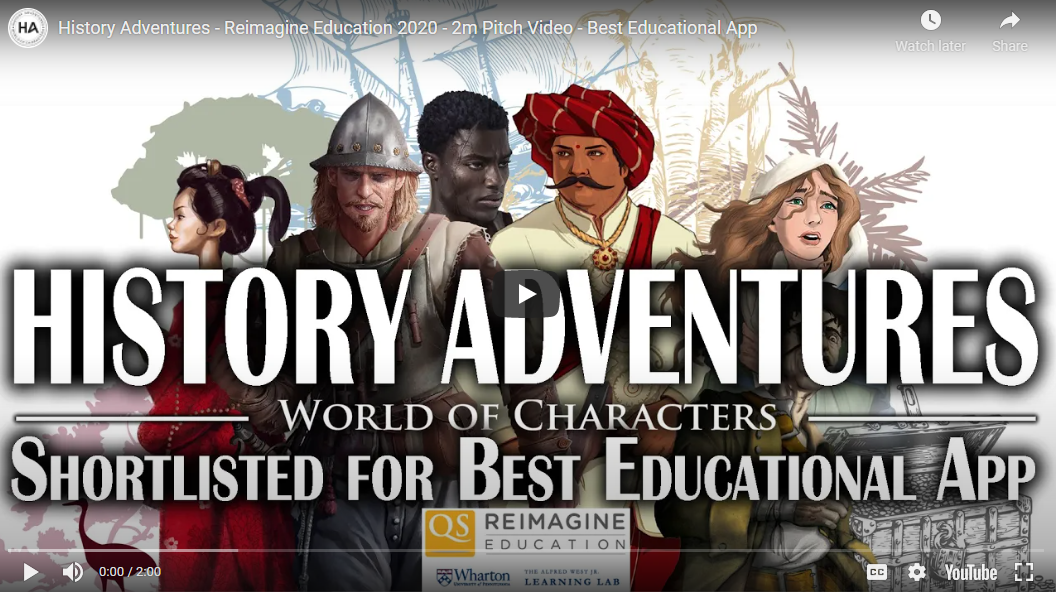
Immersive History Takes You to the Plague of Athens: Interview with Spencer Striker, History Adventures

Spencer Striker is determined to make history come alive, and to put learners in the middle of scenarios that let them role play in ways that relate to their lives in ways they never imagined possible. The latest addition is "Global Pandemics: Plague of Athens," which plunges learners in the middle of a mysterious pandemic that occured in Ancient Greece. 


Dr. Striker, who is a Digital Media Design professor at Northwestern University in Qatar, earned his Ph.D. in Digital Media from the University of Wisconsin at Madison.  

Here is an interview from May 13, 2022 about Global Pandemics.  https://youtu.be/o-oTOO2ahSg


At Life Edge, we had the privilege of interviewing Spencer in 2020 over his series featuring revolutions in history in History Adventures. Here is a link to the show: https://youtu.be/S5BNBD9INTk 

Spencer Striker on E-Learn Chat in 2020

Welcome to an interview with Spencer Striker, Ph.D., along with links to demos. 

1. Is the Global Pandemics  game ready now? 

Yes, absolutely! You can find the fully interactive web app available here: https://pandemics.historyadventures.app/

(It’s built for a desktop or laptop running in the Chrome browser, i.e. Chromebooks)

Please also find the full gameplay demo here on YouTube: https://www.youtube.com/watch?v=wZ-HVOJvqSs&t=7s 

Also, please find a full Media Kit of product screenshots here: https://drive.google.com/drive/folders/1YL0fFQBSErBGqYXVueXuKQ_gCdWXSCRj?usp=sharing 

2. How much does it cost? 

It’s absolutely free!

3. What do people think was the main thing that caused the plague? Was it something unique, or was it a massive cholera outbreak or something like that? 

To this day, historians are not certain what was the cause of the Plague of Athens. In the product, we challenge students to think like historians/epidemiologists and examine the possible causes in a feature we call: What Was It? Please see the attached screenshot as a reference! The possible suspects include: smallpox, bubonic plague, ebola, typhus, and typhoid.

4.  Can students interact with the vectors? (for example, with rats and fleas? a first-person shooter game to kill the rats?  or run from the fleas in a maze?)

We have many amazing interactive features built into Global Pandemics: Plague of Athens. Please find a list here!

  • 3D Motion Design to Recreate History
  • Advanced Web Animation to Simulate Pathogens
  • Immersive 360 Panoramas of Historical Locations
  • Animated Historical Timeline & Maps
  • Choice-based Narrative Design
  • Interactive Original Historical Documents
  • Media-Rich Adaptive Assessments

Saturday, December 26, 2020

Interview with Bill Kara, CEO and Founder of TeachMe and Addicting Games

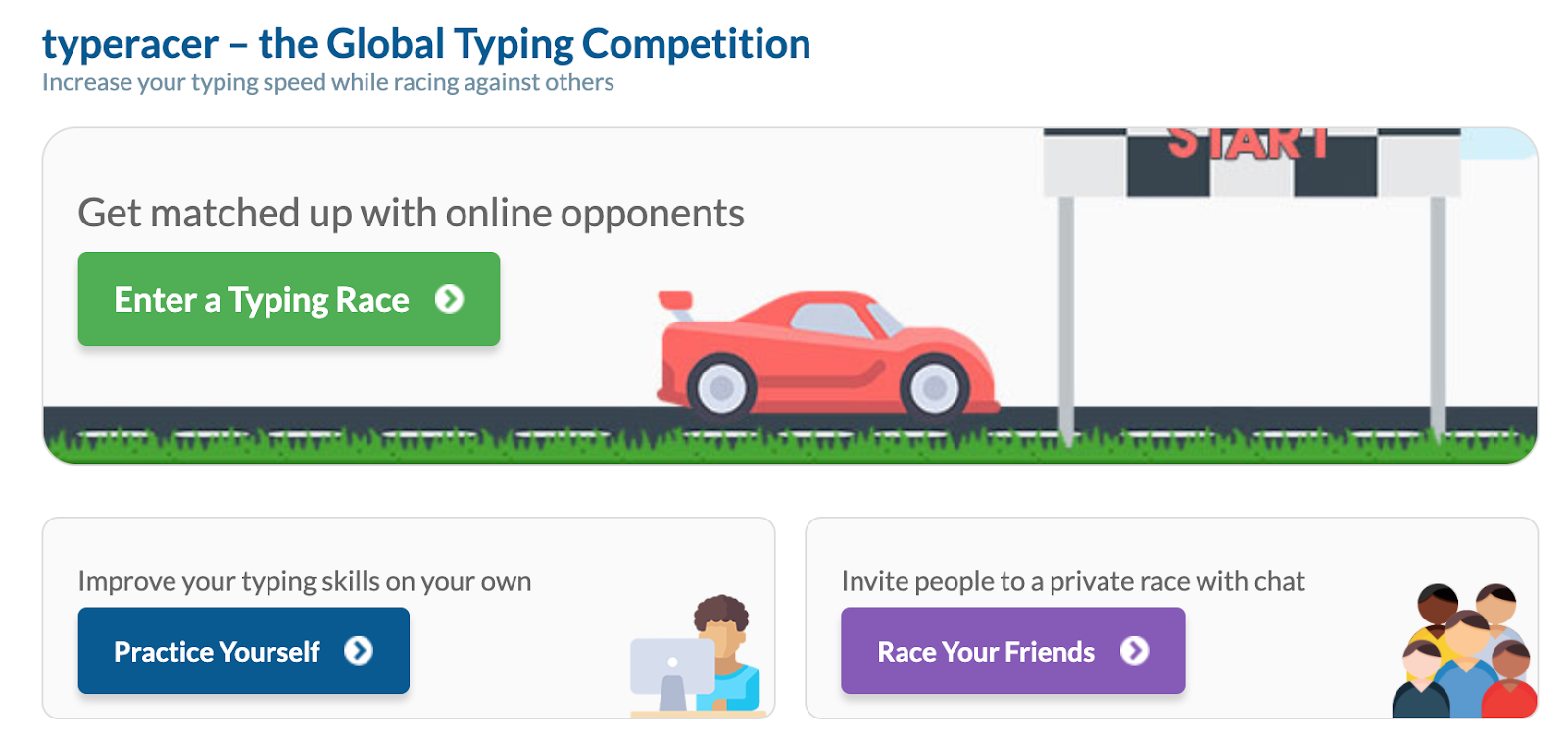
Typing is so ubiquitous that it's easy to forget that it is a skill that must be learned. How can learning to type be engaging, effective, and even fun? TeachMe has developed typeracer, a game-based typing instruction program that helps students learn to type and also how to create documents and to interact. Welcome to an interview with Bill Kara, CEO and founder of TeachMe and Addicting Games.

1. What is your name and your background?

My name is Bill Kara and I’m the CEO/founder of TeachMe and Addicting Games.  I oversee the company’s operations, growth strategies and product development. A lifelong gamer and entrepreneur, I’ve been in the gaming industry for over 20 years and have a passion for blending gaming and learning. I previously co-founded gaming company Hallpass Media, which was acquired in a roll up to create Jam City in 2011. Prior to Hallpass Media I founded Addicting Games which was acquired by Atom Entertainment before being purchased by Viacom shortly afterwards in 2006.


2. How did you get interested in e-learning? 

With two young daughters at home, I wanted to create games aimed at making learning skills fun and rewarding with TeachMe; experiences that offer more than just superficial fun on the surface. I’d always been interested in making learning more accessible through games and when I saw existing content out there was full of messages you wouldn’t want your kids to see (not to mention the titles were just really low quality), created by people that weren’t really passionate about either education or gaming as a hobby, I decided to create TeachMe as a way to fill that void. I wanted to combine these worlds of learning and play in a powerful new way with a vision that could change the lives of millions of children around the world.


 3.  Why are typing skills important now? 

Typing remains a fundamental skill, and it is one of the most foundational, yet important life skills you can learn. Learning to type fast and accurately has so many real world applications in this day-and-age - it’s an essential skill for anyone working with a computer (which is just about any profession) in any capacity. Typing effectively helps you to work comfortably and more efficiently, it aids in timely communication with colleagues and customers, creating documents, and finding new information and much more.


4.  What is your philosophy about skill-building in an e-learning environment?

Teachers want a powerful tool to complement their expertise, their passion, their skill. Parents want the best education possible for their children. Children want to play online, to master a skill, to feel like they’re growing and learning. With that in mind, we realized that education was moving in one direction and entertainment was moving in another. As parents, we have very little insight into how our kids are learning, what areas they found challenging and the speed they were progressing. And after further research we found a lack of e-learning resources customized to empower the strongest students to continue to excel while addressing the learning gaps faced by those that may be struggling a bit. We hope that games like TypeRacer, alongside the other offerings on our TeachMe properties help fulfill both objectives that also prioritizes fun.


5.  What is your program and how does it work?

TeachMe’s games and apps bring new meaning to the phrase “customized learning”. We teach students to master a skill instead of simply answering a question. And the games change based on who’s playing: their mastery of that skill, as well as their experience levels. As the learner gets better, the game — the curriculum — changes to match the optimal level of difficulty. Players pay attention longer and they learn more, which helps ensure their time online is never wasted.


As part of the TeachMe family of products, TypeRacer, allows people to race each other by typing quotes from books, movies, and songs. It is the first multiplayer typing game on the web. Millions of people from all over the globe have completed hundreds of millions of races on TypeRacer, improving their typing speed by as much as 50 words-per-minute.


6.  Please provide an example of a success :) 

As parents and kids grapple with back to school season in this uncertain time, we want to ease their transition back into the learning environment in a way that’s fun and engaging. We’ve made sure that the TeachMe experience can be accessed in any setting, with any device, anytime. I believe our achievements this year are a testament to how much students, teachers, and parents value learning tools that authentically combine practice and play. This year we’ve seen over 31MM users on Math Games, also part of our TeachMe product offering. With the re-launch of TypeRacer we’re also expecting to see the number of users grow 


Tuesday, April 21, 2020

Interview with Spencer Striker, History Adventures. Innovators in Education Series

 History can come alive online, especially in a gaming platform that allows the learners to immerse themselves not only in the time, but in the struggle to stay alive. Welcome to an interview with Spencer Striker, who has developed History Adventures, a unique educational that takes learners to the most intense times and places of history.


1. What is your name and your background? 
My name’s Spencer Striker. I’m a Digital Media Design professor at Northwestern University in Qatar. My background is a mixture of digital media production, digital learning design, and entrepreneurship—with an armchair passion for history. I grew up moving around a lot—mostly in New England, but also Los Angeles, San Diego, and Chicago. I was fortunate that I got to travel a lot as a kid because my mom loved to travel. She took us to Australia, Hawaii, and all over Western Europe—and this evoked a wanderlust in me as well as a fascination for different cultures and lived human experience. I finished high school in Chicago, then did my undergrad in History and Radio-TV-Film Production at the University of Texas. After that I tried my hand at writing novels for a while, while living abroad in Costa Rica, Honduras, and Brazil. That was an amazing adventure—but ultimately, I wound up broke in New York City, with some unpublished novels under my arm, and realized, as many people do in their mid-twenties, it was time to play the Get Out of Jail Free card and head to grad school!

After having tried old-school novel writing for a few years, I really missed collaborative media production. Writing novels is a lonely gig! I missed working with cross-disciplinary teams and all the technical/creative challenges of production/design. It was 2005, and I decided that interactive media was the future. I was fortunate to get into the New Media Design and Production Master’s Program at Indiana University. That’s where I really discovered my passion for building digital media projects and working with talented collaborators. At IU, I started a video game media studio called GameZombie TV, and scaled it up. That’s when I first saw how digital production technologies were colliding with entrepreneurial opportunities in totally unforeseen ways—and as we’ve seen over the past 15 years or so, digital media has disrupted how we do just about everything.

2.  How and when did you become interested in online learning?
Eventually, GameZombie TV came to a crossroads. Here was this online media production studio covering the video game industry that we’d built from scratch using the tools and resources available to grad students at Indiana University. We’d won Webbys, covered all the major game conferences, and achieved official partnerships with YouTube and Dailymotion. So at that point, I could try to make the project a professional organization—and achieve “escape velocity” from the university… or I could double-down on the education component of GameZombie TV—whereby this online production studio run by students at Indiana University had become a powerful way for students to learn all the different aspects of modern, team-based digital media production. Since digital learning design was my true passion, I decided to take this other route.


I got the opportunity to co-found the Media Arts and Game Development Program at the University of Wisconsin at Whitewater, and meanwhile expand the GameZombie project to the new university, introducing it to a whole new cohort of undergrads interested in the intersection of the video game industry and online media production. Driven by my enthusiasm for the project, as well as its momentum, I got into the PhD Program in Digital Media (in the School of Education) at the University of Wisconsin at Madison, whereby I began to formally study the field of digital media and learning with some of the top experts in the world, including Kurt Squire, Constance Steinhuehler, Dawnene Hassett, and others. And at the same time that I was studying this cutting-edge field of digital media and learning, I was able to apply theory to practice in my day job as Lecturer/Co-Founder of the MAGD Program at UW-W.

3.  what have been some of your experiences in online learning? 
So I had this wonderfully intense experience in Wisconsin studying Digital Media & Learning at the doctorate level at Madison—while simultaneously working full time as Co-Founder of the MAGD program at Whitewater. Doing all this in combination with continuing to run GameZombie TV: the theory/practice of digital learning really got seared into me. Once I completed my PhD in the Fall of 2012, I wanted to try my hand at industry. I went out to Silicon Valley in January of 2013, and soon after that became Founding Creative Director for a games and learning startup called Galxyz, whereby we used a sci-fi narrative game design system to teach kids the Next Generation Science Standards. We managed to raise about $4 million dollars and build a fantastic little studio in Mountain View, CA. The cross-disciplinary team we assembled of educators, creative writers, animators, and game engineers was truly top-notch. After heading up creative and product for the company for two years, I was enthusiastic to return to academia, as I thought that would be the ideal environment in which to build my idea for a new digital product initiative, History Adventures.

4.  What is History Adventures?  
History Adventures is a tablet-based digital learning product that seeks to inspire curiosity for history by using various creative techniques, including character narratives, animation, 3D, interactive infographics, choose your own adventure, sound design, and original music. The idea is to bring history to life by exploring lived human experience through the lens of five amazing men and women who lived through extraordinary, gripping, and dramatic flashpoints in time.


5.  Why did you develop History Adventures, and what is the overall goal?
I developed History Adventures as a way to defeat this unfortunate notion some students hold that “history is boring.” I think the only reason students think that is because typical formal history education emphasizes all the most boring bits—and all the inherent action, drama, and emotional stakes get buried beneath long lists of kings, queens, facts, and dates. History Adventures foregrounds the power of story through the development of character narratives, intended to pull the reader/user into the emotional stakes of these people’s drama-filled experiences. At the same time, I’m using all the tools and tricks I have from digital entertainment product design, to make the product experience come to life and feel magical and fun.

6.  Please describe two or three History Adventures.
In this newest version of the product, History Adventures, World of Characters, Revolutions & Industrialization, 1750-1900, students will encounter five amazing men and women who have to work out where they stand in this age of dramatic, sweeping change.  In late 18th Century America, one unnamed slave turned spy, Agent 355, decides to risk everything for the cause of revolution and the principle of freedom. On the other side of the world in Australia, Jiemba of the Eora Nation, decides to fight for his traditions against British invaders intent on colonizing his ancestral homeland and trampling on his beliefs.

Half a century later, a Chinese trader, Fei Hong fights a different battle. Hong decides to smuggle British opium from India to China and loses everything as he goes from smuggler, to trafficker and finally addict before being caught. In 1890s Africa, Khari decides to oppose European trade and fight back against the Belgian exploitation of his ancient tribal lands along the Congo River. The Belgian’s murderous regime mercilessly extracts rubber using local labour and Khari refuses to let his tribe suffer any more. Resistance is the only choice. 150 years after Agent 355, a social reformer called Thomas Brown decides to disguise himself as a janitor and expose the truth about the infamous Chicago meat packing district. He uncovers a world of filth, corruption and reckless disdain for human life that leads him to question what the future will bring.


7.  What are your plans for the future?
Having just published the definitive version of History Adventures, World of Characters, Revolutions & Industrialization, 1750-1900, we’ve already begun development on the next product in the digital book series, Empires & Interconnections, 1450-1750. This new product will include enhanced interactive features, 3D designs, motion fx, and animation—as well as six fascinating new characters. A conquistador trekking through the treacherous jungles and mountains of 16th Century Peru, doomed to a dismal end in his quest for glory and riches. A woman in the Medieval court of Tokugawa Japan, trading in secrets and intrigue when the politics couldn’t be more high-stakes or ruthless. A man from Angola sold by Portuguese slave traders to the Jamestown colonists in 1619. A zamindar (tax collector) in Mughal India during the British conquest of the South Asian continent. A young woman of Turkish and Byzantine ancestry living through the traumatic 1453 Siege of Constantinople by the Ottoman Empire. And finally, a Spanish alchemist living at the nexus of superstition, science, literacy, and the powerful Catholic Church, experiencing the Inquisition even as the Scientific Revolution is just gaining hold. The big picture goal of History Adventures, World of Characters is to spark enthusiasm for learning about the past… and bring the pages of history to life!

Saturday, January 13, 2018

Interview with David Scherrer, Arcademics Multi-player Edu-Gaming. Innovators in E-Learning Series


Game-based e-learning continues to boom as students respond with true engagement and high scores. Welcome to an interview with David Scherrer, founder of Arcademics, a leader in multiplayer edu-gaming.

1.  What is your name and your relation to e-learning?
I’m David Scherrer, owner of Arcademics.com – the leader in multiplayer edu-gaming. I’m passionate about using e-learning games as a powerful tool engage and motivate students.
David Scherrer
2.  What is Arcademics?  
Arcademics is a powerful approach to learning basic math, language arts, vocabulary, and thinking skills using research-based and standards-aligned games. Arcademics motivates students in grades K-6 to improve their skills in a friendly competitive environment, and teachers gain access to a database of critical insights into performance trends and measurable improvement in skills.

3.  What is your vision for the event and how are you developing games to improve math performance?
The annual Arcademics Cup is an international multiplication competition for traditional and homeschool students in grades K-6. More than 10,000 students are expected to compete during the two-day competition Feb. 1-2, 2018. Students will race against each other to solve math equations in Grand Prix Multiplication. The game’s multiplayer function allows students to race in groups of four as they answer basic multiplication problems for numbers one through 12.


The 2017 Arcademics Cup saw students play more than 325,000 games and correctly solve more than 10 million multiplication problems. Last year, teachers saw a 5 percent increase in accuracy and 10 percent increase in answer rate, or the number of correct answers per minute. In addition, students that began the Arcademics Cup with an 80 percent or lower accuracy experienced an average 19 percent accuracy increase and 34 percent increase in answer rate.

While participants progress through the Arcademics Cup, they are rewarded with power-ups and cosmetic items for their racecars, as well as a chance to win prizes – such as pizza parties and Arcademics Plus subscriptions – for their class, grade, or school. Students typically solve 30 multiplication equations per race and have unlimited access to Grand Prix Multiplication during the two-day competition.

By tracking data points such as accuracy, answer rate, and the number of correct answers per minute, we’re able to provide measurable ROI to teachers, parents, and students.

4.  Please describe three or four of your games. What do they do?  Who are they for? How do they work?
We have a range of free, research-based math and language arts games that help students improve skills such as multiplication, money, fractions, spelling, geography and more. The games challenge students to respond quickly over a series of short, timed trials. The student’s goal, and the goal of the game, is to increase their rate of correct responses and decrease error rate. The games help improve student performance through increased time on task, increased motivation and engagement, and increased corrective feedback.


We offer free, multiplayer games for grades K-6. Some of our most popular games include:
Grand Prix Multiplication (Multiplication)
  In this game, students race against each other in groups of four to solve basic multiplication problems for numbers one through 12.
Spelling Bees (Spelling)
 Four students aim to spell four-to-eight-letter vocabulary words correctly and quickly to build beehives. The game functions as both a spelling and typing game.
Capital Penguins (Geography)
 In this timed game, solo students guide their penguin to state-shaped ice floes based on the state capital prompt.
Puppy Chase (Decimals and Fractions)
 In groups of 12, students race as puppies around a track by correctly converting fractions to decimals.

5.  Please describe some of the winners of Arcademics. 
Roosevelt Elementary School Fifth Grade Teacher Christopher Lombardi participates in the Arcademics Cup each year, and his entire school is heavily involved. Students frequently practice various games in order to prepare for the Cup, and they have had multiple winners over the years.

Lombardi’s focus is on his students achieving their personal best time, and he has seen steady improvement month-to-month and year-to-year. For example, last year a student was ranked 98th in the school’s Arcademics Cup competition, and this year has improved to a third-place ranking! Lombardi especially enjoys the tangible results the students can see from their hard work, all of which he can track in the teacher’s dashboard.


6.  What are your plans for the future? 
In the near future, we are excited to host the 2018 Arcademics Cup and hope to help students and teachers alike start their year strong. Looking forward, we plan to add more games across multiple categories and look forward to continuously increasing participation in the Arcademics Cup.


Thursday, March 19, 2009

Interview with Patrick Mileham, NexLearn - Innovators in E-Learning Series

Virtual worlds, simulations, and games are used in training and education in ever-expanding applications which seek to create learning experiences. Welcome to an interview with Patrick Mileham,director of editorial development for NexLearn (http://www.nexlearn.com).

What is your name, your position, and your affiliation and what is your involvement in NexLearn?

Patrick Mileham
Director of Editorial Development for NexLearn
I work closely with our partners to develop relevant, instructionally sound training experiences.

What is NexLearn and what is its mission and vision?

www.nexlearn.com

NexLearn is a custom e-Learning developer with expertise in creating immersive learning simulations. In fact, the core group that started NexLearn developed some of the first business-related e-Learning courses to include branching social simulations. Most of the company’s team members have been involved in the development of e-Learning tools or courseware for more than 15 years. We definitely excel in industry experience and knowledge.

The company’s mission evolved from its vision statement: “To advance excellence in learning technologies by combining people, technology and great ideas.” Once we decided where we wanted to go as a company, we outlined the best and most effective way to get there. By leveraging our creativity, experience and innovative development philosophy, we knew we could build strong customer relationships that would allow us to lead the technology-based education industry.

What new products and services do you have?

In 2006, NexLearn introduced SimWriter, a simulation authoring tool that gives anyone—including instructional designers, subject matter experts, trainers, managers and human resources personnel—the opportunity to develop custom, media-rich immersive learning simulations based on their company’s own content, processes and procedures. And since the tool features pull-down menus and pick-and-click functionality, SimWriter users can focus on creating engaging and instructional storylines instead of computer code. SimWriter’s ease-of-use translates into a savings of many hours of development time, effort and money.

Just last month (February 2009), we released SimWriter 3.5, the latest version of the authoring tool that includes more than 30 new enhancements. We believe it is the most robust and flexible rapid development immersive learning simulation authoring tool available today. And the feedback we’ve been receiving from SimWriter users—including experienced developers and people who are just starting to develop courses—proves that the popularity of immersive learning simulations continues to grow.

In addition, NexLearn provides a full range of custom courseware development services. We can do everything from Knowledge Engineering to Video and Audio Production in our onsite studios. We have over 1200 immersive learning projects completed in the last 14 years, including some projects as long as 183 hours of instruction and as short as 30 minutes.

What do you identify as the key new trends that have made NexLearn beneficial to people?

Well, with the current state of the economy, we’re seeing more companies putting greater emphasis on training...including those that have downsized their workforce. It’s critical for corporate leaders to realize that training isn’t a luxury that’s only valuable when business is good. Employee training and development is an investment that is critical to the success of their business—especially when they’re asking more from fewer employees. Companies are searching for help to train and cross-train their employees effectively and efficiently.

Business leaders and CLOs are attracted to NexLearn for a couple reasons. First, we offer SimWriter. Again, the benefit here is that the tool offers developers the capability to create customized, complex branching social simulations in a quarter of the time and at a fraction of the cost it normally takes to create the same project using other development methods and tools.

And second, we’ve developed a unique and beneficial three-tier process for helping our partners succeed.

For clients that have limited or no development resources to create their own training courses, NexLearn experts can create and maintain projects for them—from the spark of an idea during the initial brainstorming session, to instructional design, graphic design and media development, to the annual updates to ensure the course content is current. NexLearn is a full-service developer.

The second option for NexLearn clients is a “we create, you maintain” plan. In this scenario, NexLearn develops the program but the client makes any updates to the course. This option would have been almost unthinkable just a few years ago, but with the availability of SimWriter, companies now have a tool that gives them more control over the development process. By doing more of the work, companies can save more money.

Finally, companies that purchase SimWriter can take advantage of the “you create and maintain” option plan. Many organizations have qualified internal resources to be able to create their own training programs, we’re now giving them the ultimate rapid development tool they need to create high-quality, media-rich courses.

How does NexLearn work? Can you provide one or two examples?

As I mentioned earlier, NexLearn and SimWriter are a powerful combination that provide multiple options for companies interested in creating customized training that is engaging, interactive, and very effective. We believe that simulation learning is the best approach to training today. By creating life-like scenarios, learners can experience real-world processes, procedures and decision-making opportunities in a safe learning environment. In the real world, failure is not an option. In a simulated world, it’s a learning experience.


This is an example of a customer service simulation created using avatars.


This is an example of a sales simulation created using video to allow learners to evaluate both verbal and physical cues to respond appropriately.


This example shows the unique SimWriter interface that allows users to view both the simulation map and the corresponding text and media components simultaneously.

Please describe upcoming activities.

Chief Learning Officer Summit 2009
Sawgrass Golf Resort & Spa, Ponte Vedra, FL
April 1 – April 3

ASTD 2009 International Conference and Exposition
Washington DC Convention Center
June 1 – June 3

Optional question: How can NexLearn help develop human capital and resources? How can it contribute to a global economic recovery?

The challenges of a waning economy, such as hiring freezes or layoffs—coupled with the fact that millions of baby boomers are preparing to retire—are forcing business leaders to maximize their human capital. To accomplish this feat, organizations must invest in the skills of their employees like never before. From soft skills like communication, negotiation, and leadership to more technical skills like equipment operation and even industry-specific compliance training, it’s critical to the success of every business that employees are well trained. We work closely with our partners to identify and develop the educational and training experiences employees need to do their jobs better, faster, and more effectively.

Perhaps the worst thing a business leader can do right now is to pull the plug on employee training. By drastically reducing training opportunities, workforce skills will become stagnant and companies will lose their competitive edge. On the global stage, NexLearn and SimWriter contribute to the world economy by helping organizations develop custom training, which allows them to fill job vacancies that require specific expertise.

Blog Archive