Tuesday, March 24, 2015

Learner Identity and Motivation: Connections to Aspiration


Learning can be a risky business, especially when it has to do with a learner’s sense of self and their identity.  For example, how might a person who is learning a language for the purpose of becoming part of a group comes to realize that the act of learning is modifying who and how she is?  Is the change in one’s identity a good thing? If so, how and why? What impact does it have on learner motivation?


A good example is the case of learning a language. While learning a language may be for the purposes of assimilating in a society (or, in a broader sense, fitting into a group or workplace) it is important to keep in mind that assimilation should not go too far, and seek to efface or obliterate the identities of the learners. 

susan smith nash - learning spanish in jalisco
Learning a language requires changes in one's sense of self. Motivation to continue often involves the learner's aspirations, dreams, and ultimate life goals. Learning language in Jalisco.
Learning involves socialization processes, and the degree to which one can both maintain autonomy and feel a part of a group is an important influencer in student satisfaction and motivation. In other words, a balance must be maintained.

An over-emphasis on testing, assessment, and individual achievement (rather than group dynamics) can destroy motivation.

Individual autonomy can be effectively instilled by giving learners the ability to critique texts and instructional materials, have choices with respect to their topics of study, and choose ways in which they are assessed.

It is useful to incorporate aspirational elements in motivation, especially in learning a language, or a skill set / knowledge base that gains entrance to a group (especially a highly desirable group).

Reflective learner journals can be helpful, not only in developing meta-cognitive skills but also in the ways in which instructors can learn to tailor their instructional strategies in order to be more effective.


Conclusion
Perhaps the most surprising insight is that in order to encourage the mediation of identity that occurs when learning a language (whether a formal language or the informal “language” of a workplace or community of interest), it is useful to look at aspirational elements of the learner’s identity framework.

In other works, what’s the learner’s dream?  What is the learner striving to be or become?

By appealing to the learner’s dream identity, or aspirations, you as an educator or instructional designer, will make it easier for the learner to tolerate the ambiguity and/or frustration that he/ she may feel when learning a language (and hence tending to give up her own identity).

In order to increase a sense of autonomy (and comfort with the process), it is helpful to give the learner the ability to influence his / her own methods of interacting and being assessed.

References

Deci, E. L., & Ryan, R. M. (1985). Intrinsic motivation and self-determination in human behavior.  New York: NY: Plenum Press.

Lamb, M. (2011).  Future selves, motivation and autonomy in long-term EFL learning trajectories . in G. Murray, X. Gao, & T. Lamb (eds). Identity, Motivation, and Autonomy in Language Learning. (pp. 177-194). Bristol, UK: Multilingual Matters.

Lamb, T. E. (2011). Fragile identities: Exploring learner identity, learner autonomy and motivation through young learners' voices.  The Canadian Journal of Applied Linguistics, Special Issue. 14:2, 68-85.


The Dynamics of Self-Concept and Learning Performance

It is tempting to look at self-efficacy (Bandura, 1997) as the only reflector of an individual's belief about himself or herself in terms of whether or not he or she is likely to stay motivated and to achieve high learning performance.

Podcast: http://www.zenzebra.net/podcasts/motivation2-nash.mp3

However, there is another way to map the process of how one's beliefs about themselves frame and facilitate learning performance. That concept can be described by Core Self-Evaluation (CSE).

Definition of Core Self-Evaluation (CSE): "fundamental evaluations of one's self-worth, competence, and capabilities"  (Kim, etal, 2012)

Question: What is the relationship between one's CSE and one's ability to learn? How does CSE relate to one's ability to succeed?  Does a positive CSE translate to enhanced motivation and higher learning capacity?

Individuals with a high CSE can tend to consider themselves "confident, emotionally stable across different contexts, in control of their lives, and positive about their worth" (Judge, etal, 2003).

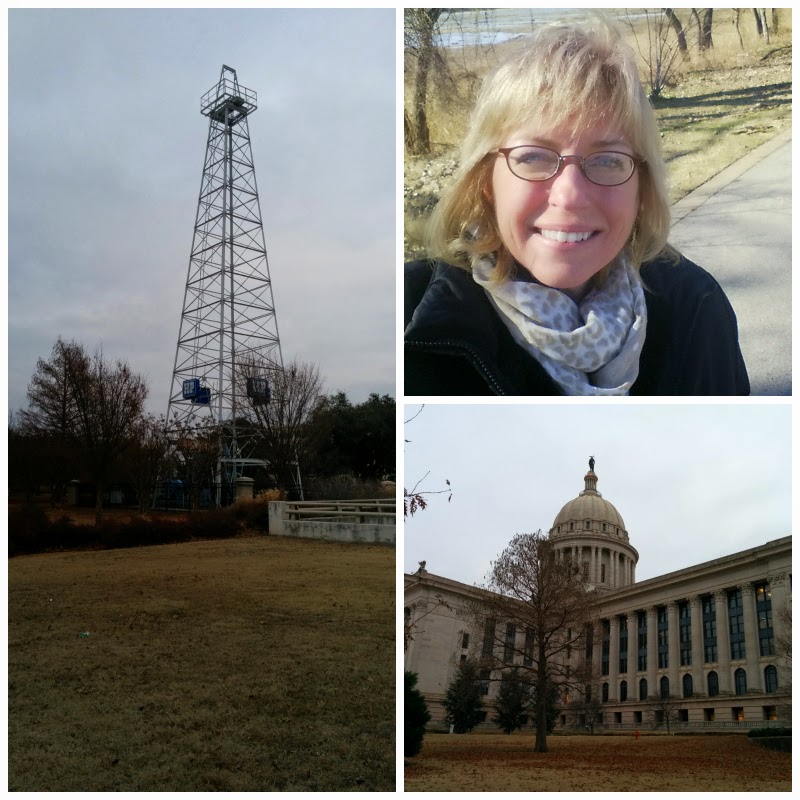
oklahoma oil capital
Oklahoma depends on oil and gas production and the entrepreneurial spirit that accompanies it. In order to be successful, entrepreneurs have historically had to possess confidence and a positive core self-evaluation.
Having a positive CSE is not enough, however, when predicting performance,

It requires an additional step or factor, namely the motivation to learn. Here are the four main factors that are in play as a person employs their core self evaluation(s) in order to perform.  The way in which each is most likely to contribute to success is briefly detailed:

o    Goal choice: should be self-set, and appropriate, achievable, and meaningful
o    Goal striving: persistent effort toward the goal reflects the belief that one is making progress toward a goal that makes sense
o    Self-efficacy:  the belief that one is able to achieve the goal is vital in maintaining focus and the willingness to work through uncertainty
o    Goal commitment: an ongoing and self-reinforcing set of conditions and self-reassurances that keep the learner engaged and working toward the goal

All dimensions should be taken into consideration in evaluating learning performance, and the process is dynamic.

Key findings:


•    Individuals with high levels of CSE tend to set more challenging goals, and tend to shuttle between the different factors (goal choice, goal striving, self-efficacy, and goal commitment) to use them as a dynamic process to reinforce progress toward the goal, with the result of higher learning efficacy.

•    Individuals with lower levels of positive CSE may experience more anxiety, and it makes the dynamic process less fluid; in these cases shuttling between the factors may require coaching and/or team work. In this case, leadership is helpful in matching the individual with lower levels of CSE with appropriate team members and/or mentors

•    Good leadership is important in the process. First, leaders can help identify people with highly positive Core Self Evaluations and they can encourage and reinforce the high CSE.  Second, leaders can facilitate the process of helping find team members and mentors to reinforce the dynamic process of shuttling between goal choice, goal striving, self-efficacy, and goal commitment.

References


Bandura, A. (1997). Self-efficacy: The exercise of control. New York: Freeman.

Judge, T. A., Erez, A., Bono, J.E., & Thoereson, C. J. (2003). The core self-evaluation scale: Dvelopment of a measure. Personnel Psychology. 56, 303-331.

Kim, K., In-Sue, O., Chiaburu, D., & Brown, K. (2012). Does positive perception of oneself boost learning motivation and performance? International Journal of Selection and Assessment. 20:3. 257-71.


Why Sociocognitive Conflict Is Good: The Best Ways to Use Discussions and Social Media for Motivation and Engagement

Collaborative learning can be very motivating because it helps reinforce social needs (Maslow) and needs for affiliation (McClelland). However, there are challenges in developing collaborative discussions using online courses and/or social media, for several reasons.

Podcast: http://www.zenzebra.net/podcasts/motivation4-nash.mp3

Engagement is a complex concept, and for learners to participate in a sustained sense, it is necessary to satisfy several conditions:

•    Have a positive feeling about participating or performing

•    Be willing to take risks and invest one's cognitive efforts in thinking and learning

•    Respect other learners while actively participating

Some ways in which collaborative discussions in online courses and in social media could actually be counter-productive for motivation and engagement include the following:

1.    Bad discussion board prompts may not encourage working together

2.    Prompts are too narrow, and do not include the incorporation of personal experience, prior learning, and/or opinion

3.    Social media can be too ephemeral (Twitter), and tends toward synchronous communication, which may exclude learners who do not have connectivity at the same time

4.    Social media can be distracting if the media / prompts do not tie closely to the course outcomes and learning objectives

5.    Learners may have differing levels of competency in developing media (photos, videos, audio), which can be discouraging to those who are at either end of the spectrum (highly advanced, or newbie).
motivation and trying a new identity - susan smith nash - austin, texas
Try a new identity: conflict gives you a chance to think from multiple perspectives.
Effective strategies:

•    Implement distributed leadership: include learner-guided activities such as discussion forum activities or social media postings that encourage individuals to take a position and then listen to their other classmates in order to engage in a debate (positive sociocognitive conflict)

•    Encourage energizing, productive sociocognitive conflict by posting prompts that encourage diverse opinions and sharing of insights (Johnson & Johnson, 2009)
•    Tie the prompts and the activities to a specific activity, challenge, current event, or ongoing project (Paris & Turner, 1994)
•    Minimize frustration by building in positive feedback for risk-taking, and for modifying / mediating output to align with abilities and a negotiated final product / outcome

Conclusions

Perhaps one of the most interesting findings is that conflict should be sought, rather than avoided in order to heighten engagement and motivation.  Of course, this is not referring to destructive or self-concept-damaging conflict.

Instead, it refers to socio-cognitive conflict that encourages the sharing of ideas, and lively, engaged, and emotionally compelling posts.  Thus, the individuals find themselves caring about what they’re doing – emotions / affects are triggered – and they then take ownership in the position they’ve taken, and go to some length to find ways to post supporting information.

References

Graesser, A. C., & D'Mello, S. (2012). Emotions during the learning of difficult material. in B. Ross (Ed.), The Psychology of Learning and Motivation: Vol. 57 (pp. 183-225). New York: NY: Academic Press.

Johnson, D. W., & Johnson, R. T. (2009). Energizing learning: The instructional power of conflict. Educational Researcher, 38 (37-51).

Paris, S., & Turner, J. (1994) Situated motivation. in P. Pintrich, D. Brown, & C. Weinstein, Eds. Student Motivation, Cognition, and Learning: Essays in Honor of Wilbert J. McKeachie. (pp. 213-237). Hillsdale, NJ: Earlbaum.

Wu, X., Anderson, R. C., Kim, N.J., Miller, B. (2013) Enhancing motivation and engagement through collaborative discussions. Journal of Educational Psychology: 105: 3, 623-632.

Monday, February 23, 2015

The Best Possible Collaborations in the M-Learning Space

I've been doing quite a bit of thinking about the way in which new needs and technologies are impacting the way education and training are prepared, delivered, and administered. All the advantages of m-learning come to the forefront: on-demand, ubiquitous (esp with wifi), and practical. There are also new advantages as well, which have to do with the way in which multimedia and social networks make collaboration and the use of multiple types of content possible.

As a result, there are some significant changes in the way in which materials are developed and deployed, and there are also differences in expectations of the learners / users.

The high-definition, high production value end of the instructional materials spectrum. Materials for m-learning can also be collaborative and created by learners.
Changes in Development / Deployment: Because the technology changes quickly and because instructional materials emerge quickly, it's very important to have a quick-to-market platform which incorporates existing multimedia and resources.

Here are a few considerations:
    * The LMS will be a shell from which content is accessed
    *  It may be desirable to develop programs that do not use an LMS, but instead, utilize a bundle of products, such as Google materials
    *  Assessment can be done via a lite version of an LMS or via collaborative archiving (GDrive, Dropbox, etc.)
    *  Social media can be used for communicating with group members and making them aware of resources (Twitter, Instagram, Facebook), but not for confidential elements
    *  Instructional materials will be available in a "just in time" manner, and not necessarily developed months or years in advance
    *  Courses respond to changing needs (regulations, new technologies, new job opportunities) and so are often in flux

Implications for Credit Evaluation:
    * It may be necessary to evaluate the *type* of materials, and be comfortable with the fact that a textbook will not be the only materials
    *  The educational institution would simply provide representative samples

Increased Focus on Collaboration:  Collaboration is important and with new technologies students have more flexibility than ever to learn from and with each other.  This changes the nature of tasks and assignments, and also the way in with learning takes place.

Here are a few considerations:
    * Increased number of games and gamification that should be situated and purposeful (ties to learning objectives) not random or simply amusing
    * More interactive uses of shared texts, images, maps, and videos that are produced by students and posted in social media (youtube, instagram, etc.)
    * More need for informal communication done quite quickly (via Twitter, Google Hangouts, WhatApp, Skype, FaceTime, etc.)
    *  May not be possible to evaluate the nature of the collaborative processes -- but important to provide guidelines
    *  Will be important to have examples of products / projects to be completed by students
    *  Rubrics may seem a bit subjective, and so the process itself should be important and students need to reflect on their learning journey, and focus on meta-cognition
    *  Experiential learning / prior knowledge are easily incorporated in collaborations

Implications for Credit Evaluation:
    *  Rubrics should take into consideration the process as well as the final product
    *  Incorporate meta-cognitive strategies for instruction and evaluation
    *  Games / gamification should focus on situated learning that can build on prior knowledge

Changes in Assessment / Evaluation:  M-Learning makes assessment via gamification, interactive quizzes, and collaboration very convenient.

Here are some considerations:
    * Gamification should be easy to implement and change in order to maintain maximum situatedness
    * Portfolios can include multimedia, with clear tie-ins to learning objectives
    *  Rubrics need to be clear and also to incorporate a learning journal to reflect on metacognition
    *  The process of collaboration itself should be a part of the assessment, and can be done by means of a learning journal
    *  Interactive quizzes should be of the appropriate difficulty
    *  Quizzes should work easily on all devices
    *  Collaborative efforts (portfolios, projects, etc.) need to be clearly situated in the learning setting / goals, and appropriate scaffolding needs to have been developed
    *  Collaborative efforts need to clearly tie to learning objectives
    *  Allow students to build on prior knowledge and experience when possible, and form collaborations so that they can incorporate experiential learning

Implications for credit evaluation:
    *  Need to be clearly tied to learning objectives
    *  Higher levels of Bloom's taxonomy often represented in collaborations
    *  Interactive quizzes can be effective for the lower level Bloom's taxonomy elements (identification, etc.)
    * Institutions need to provide a backup / contingency assessments in case of massive technology fail   

Final Thoughts
It is hard to predict the future, except to know that there will be changes, and the demand for new information, skills, and education will continue to be strong. There seems to be an increasing sense of urgency, and those institutions that are nimble and can provide knowledge transfer and skills building in a quick, effective, easy-to-implement and easy-to-complete manner will be the most successful of education / training providers. Entrepreneurship will always be rewarded, especially for those entrepreneurs are particularly adept at recognizing, assessing, and taking advantage of opportunities.

susan smith nash with fresh coconut taking a break from designing an online course
Susan Smith Nash eating fresh coconut, thinking about training and education that includes collaboration and can be accessed via smartphone, laptop, tablet, or regular computer, and which does not require much bandwidth.


Saturday, February 14, 2015

Interview with Rick Zanotti, RELATE, Leaders in E-Learning Series

Taking an integrative approach to e-learning, with perspectives gained from working across disciplines and with evolving technologies can provide unique insights. Welcome to an interview with Rick Zanotti, an influential e-learning leader whose perspectives have shaped products and approaches to e-learning and the development of learning management systems.

1.  What is your name and your relation to e-learning?

My name is Rick Zanotti. I'm the president of RELATE Corporation and I've been personally involved with eLearning since the early 1980s when I developed training on green screen monitors! Since then, in 1995, RELATE became a full-service elearning and media creation and development company.

Rick Zanotti, RELATE
I was involved early on with products like Authorware, IconAuthor, Quest and others and we were pioneers in developing full-screen courses by using advanced compression techniques for graphics, video and audio in times of slow computers and even slower Internet connections (pre-internet as well).

2.  What do you think are some of the main issues facing individuals who need training to maintain their professional credentials?

Two main issues: Time and Context. Often, professionals seeking to revalidate licenses such as Accountants, Doctors and others, have busy schedules with little time to attend stand-up training sessions. Often, the training they attend is not contextual, just fact-based information. This means non-engaging and often boring.

eLearning could do wonders for this and create consistent experiences and, if written correctly, would have some context, or story, to make the learning more personal and significant to the learner.

3.  What are some of your favorite tools?

I use tools like Articulate Storyline, Lectora Publisher, Adobe Captivate and iSpring Presenter. I can't say I use only one tool specifically. I tend to decide on, or use, the tool that best meets the needs of the training being produced. They all have their strengths and weaknesses.

Unfortunately, may of the tools are also pretty limited and if we could combine them into one we'd be in a better development place.  But reality being what it is, I adapt to the client's needs and we make due knowing the workarounds to get the job done well...

4.  If you have to launch a new program, how has your approached changed from how you did it in the past?

Our approach has remained pretty consistent from 20 years ago till now. While the tools have changed significantly and not always for the better, the processes remain largely the same.

We start by asking the client questions about their needs, the specific audience, goals and results and deployment methods (now almost exclusively web-based or mobile). From that we determine what tools to recommend or use. Often we are constrained by what the client uses, but that can also be flexible in many cases.

5.  What are some of the new directions that you find most interesting?

Being a techie at heart (most people don't know I have 25 years in the IT field), I like all aspects of web-based training, the increasing use of video in elearning, as well as the blended elearning approaches that can be quite powerful. I am not as keen on mobile learning though I completely embrace mobile technology and have more tablets and phones to my name than I really need... LOL  But I feel we're not there for mobile yet for many reasons of which security, proper writing and design and device connectivity and corporate acceptance.

Friday, February 06, 2015

Interview with Don Tharp, COPAS: Leaders in E-Learning Series

Quickly changing environments pose special challenges for training and education developers and providers. The regulatory environment can be in flux, as well as the economic, political, and physical contexts. Being able to meet the challenges is of particular use, and it is gratifying to be able to talk to a professional who has successfully developed and implemented training and assessment in many challenging and rapidly changing environments. Welcome to an interview with Don Tharp, Director of Training and Education for COPAS (Council of Petroleum Accountants Societies).

1.  What is your name and your relation to e-learning?

Donald “Don” Tharp
Council of Petroleum Accountants Societies (COPAS) - Director of Training and Education

I spent 28 years in the United States Air Force involved with training, education and operations whether it was for my needs or my brothers and sisters in arms. I worked at the United States Air Force Academy twice with a stint at University of Northern Colorado completing my Educational Technology Ph.D. Think about the mid to late 1990s and the educational changes taking place especially regarding Distance Learning, Technology advancement and integration, and growth of Learning Management Systems (LMS).
Don Tharp, Ph.D.

The military was continually trying to develop ways to integrate technology to further education and training especially for those of us continually heading over to the “desert” for combat operations. This opportunity provided a chance to work on both sides of the process as a developer, user and integrator.

Don Tharp while deployed in Iraq
As I retired and departed the military I was fortunate to start work with Lockheed Martin as a training manager, holistic systems designer, business development and technology integrator. Working with engineers, partners and customers provided the basis for my vision of e-learning focused on life-long learning and learner engagement. I received an opportunity to return to academia and educational technology designing, developing, integrating and evaluating coursework for my courses and our schools’ faculty and staff. I had come full circle in e-learning and was ready to take on a larger project working in the same field as the rest of my family members, petroleum.


 I started work at COPAS May 2014 with the responsibility of updating and adding new educational courses. First goal was to breakdown what education and training we currently had available and establish a strategic plan to maximize e-learning and technology integration. I developed our 3-5 year strategic plan focusing on shifting from 8 courses consisting of PowerPoint with text and a few pictures and even less video to courses and modules that are objective driven. The key is to establish active learning for engaging our learners to entice them to become life-long learners focused on their own professional development.  With that thought in mind, our analysis showed we could use technology to enhance and triple our courses using a LMS for online learning, communities of practice, collaborative engagement, and instructor growth.

 My current mantra is building up our network of instructors and subject matter experts who are willing to engage e-learners and their own learning. We are moving ahead with year one of e-learning that will include online with an instructor monitoring, webinars, virtual instructor training and face-2-face classroom using a variety of elearning methodologies.

2.  What do you think are some of the main issues facing individuals who need training to maintain their professional credentials?

There are a few issues facing individuals needing to maintain or even grow their professional credentials today. We need to get away from always calling it training when most of the time we’re engaging our learners educationally. Additionally, if you look online at the variety of professional education opportunities they are boring. They are either 8 hours of PowerPoint with tons of text spewed by the all-knowing instructor to the learner or Webinars spouting instruction or self-paced courses that just don’t turn the learner on. Sometimes we add in audio, video and/or graphics (pictures, clipart etc.) thinking we’ve expanded our learner engagement by hitting more senses. While that is a good start, it is far from what is needed for learner to become excited about learning. We need to get the instructors to become more engaging and “guides on the side” and not “sages on the stage.” Worrying about instruction time and not learning has trapped us. It is time to go back to step one in the design process and remember to include our learners and instructors during the analysis phase. Then decide on the appropriate media to get learning opportunities to the students.

Additionally, during the media selection process each designer gets locked into the tools they know and fail to use more modern and up to date instructional tools and media. Take Flash for example; while a great tool and has its place too many designers are still using it for every educational course they design. What about using social media (this is a tough one to use but things have changed), additional web resources, short PowerPoint (completed appropriately) snippets, micro-learning segments or even the old question and answer periods used by master teachers? We need to engage our learners actively.  Active learners become more willing to believe and use professional development to grow themselves maintaining and expanding on their professional credentials.

3.  What are some of your favorite tools?


As an Educational Technology believer and user, I believe in using a wide variety of technologies especially to reach as many of my learners as possible. Some of the items aren’t considered technology – collaborative/group learning and projects, communities of practice and peer-2-peer learning. What technology can do for us is expand our reach and assist us using those learner centric tools. Putting the focus squarely on the learners. To help me get there I believe in Learning Management Systems that are responsive and adaptable like Moodle or Blackboard. We’re going the Moodle route through a Moodle Partner in order to keep our costs down but also allow us to have better access to bringing in learner requested toolsets like: Video streaming (Kaltura), Communities of Practice and Portfolios (Mahara), Virtual Instruction and office hours (Adobe Connect and BigBlueButton) and lastly adaptable learning modules where I can use Social Media, Active Learning and a variety of evaluation techniques and types to avoid boredom and keep the elearning responsive. So whatever software and hardware can help me engage the learner via simulations, problem-based, case-based learning, and collaboration we’re trying to use it if it is cost effective.

4.  If you have to launch a new program, how has your approached changed from how you did it in the past?

Since we are actually launching a new program for COPAS and our Societies I will tell you, yes my approach changed from my military and corporate days. I believe having been involved military training and education, corporate training and education and then returning to higher education allowed me to finally understand we can engage our learners by working a mixed instructional design process.

 While using normal ADDIE (Analysis, Design, Development, Implement and Evaluate) gets great results we need to work faster and get more students and instructors involved earlier. This requires bringing in rapid prototyping and mixing it with ADDIE. It makes it easier on the Subject Matter Experts (SMEs) to work with instructional designers and stakeholders. Once I can show them a variety of ways to engage the learners they become much more interested in adjusting how to get facts and thoughts to the learners. They are becoming believers of life-long learning. Once you adapt the thought process "everyone continues to learn across his or her lifetime," you realize you don’t have to jam everything in one learning module. You can start thinking out of the old “sage on the stage” box and start guiding the learner towards their desired path. It is then the process gets fun and very interesting.

5.  What are some of the new directions that you find most interesting?

How learning technology is the be-all today tends to get way too much focus. I love technology and we need it to reach more learners and provide those engaging learning environments but it is only a tool. I do love how others are starting to think outside the box and focus more on learners and not learning styles. We need a mix of media opportunities to reach every learner but we need to do it correctly. 

All that being said, I am intrigued on pushing Moodle, its building blocks and outside modules to build a system that can provide learners multiple learning opportunities from: Webinars that engage, Virtual Learning used collaboratively, Communities of Practice, Badges and Portfolios, Instructor Development (as important if not more so to learners success as any technology or course), and lastly engaging material all focused for the individuals lifetime of learning. That is a quest worthy of pursuing.


Monday, January 26, 2015

Interview with Nikolas Baron, Grammarly: Innovators in E-Learning Series

Becoming a more effective writer by means of interactive, cloud-based grammar and composition tools has become much easier as adaptive elearning-focused web applications have become more sophisticated. One of the leading innovators, Grammarly, has pioneered new algorithms and approaches for writing enhancement software which are of great use for anyone who must write reports, proposals, and articles.
Welcome to an interview with Nikolas Baron, of Grammarly.

1. What is your name and your relation to e-learning?

My name is Nikolas, and I’m an online marketing manager at Grammarly. We make an online tool that improves your writing by detecting, explaining, and correcting mistakes as you type. Over four million users trust Grammarly with their writing, and it’s my job to keep that number growing. Many of them are students who want to write stronger essays, theses, and college applications. We also have many teachers who are users and need a tool to grade their students’ work and authenticity.

Nikolas Baron, Grammarly.com

2.  What is Grammarly? How did it start? How has it evolved?

Grammarly is an advanced writing enhancement software with grammar, spelling, and plagiarism checker. We are currently used by four plus million people around the world. Our biggest users are students wanting to write stronger essays, theses, and college applications and teachers needing a tool to grade their students’ work and authenticity.

Our founders, Alex Shevchenko and Max Lytvyn, who are both ESL learners, started Grammarly in 2008 with the goal of improving lives by improving communication. Alex and Max foresaw an opportunity to create a powerful tool that would instantly and accurately provide writing assistance to the more than two billion native and non-native English speakers around the globe. Since then, our proofreading algorithm has continuously evolved to cover contextual spelling, grammar, and punctuation mistakes. When a mistake is detected, Grammarly offers a suggested correction as well as an explanation of the mistake. To make sure Grammarly can be used wherever you write, we’ve made it available in your browser and Microsoft Office (e.g. Outlook or Word).


3.  How are interactive grammar tools better than they were a few years ago?

The English language has many exceptions to its rules, and writing enhancement software was very inaccurate in detecting contextual errors such as there, their, and they’re. Today, Grammarly can more accurately catch and correct English spelling and grammar mistakes based on deviations from baseline grammar standards. For example, when a user receives feedback from Grammarly with a detailed explanation, they make an informed decision about how and whether to correct the mistake, and Grammarly’s algorithms learn based on that feedback.


4.  How is Grammarly different than other programs? For example "WriteClick" offers automated grammar checks.

Grammarly regularly conducts tests to compare our algorithms against our competitors (e.g., Microsoft Word). Our continuously improving machine learning algorithm always wins. In addition to being more accurate, our Google Chrome extension, Microsoft Office add-in, and web application mean Grammarly is accessible wherever you write. I would also argue that Grammarly provides the most beautiful and intuitive  user experience. Our team obsesses over every shade, animation, and button.


5.  How is Grammarly available? Is it cloud-based and can it be used on my phones (iPhone 6 and Nexus 5)?

Grammarly is available via www.grammarly.com, through our add-in, and for free via Google Chrome.

6.  What are some of the drawbacks of Grammarly?  Can Grammarly be used for people learning English?

Grammarly is the most accurate automated proofreader, making it a great “second set of eyes” for everything from quick emails to the first draft of your manuscript. It is not, however, a replacement for a human proofreader. To minimize the chances of receiving incorrect suggestions, I would recommend testing it with a text that has not yet been proofread.

Grammarly is a great English-learning supplement because it offers explanations for every change it suggests.To make sure the explanations make sense, we include examples on how to apply the rules correctly.
7.  What are your plans for the future?

Our mission is to improve communication for the two billion English speakers out there. As we continuously focus on creating a seamless user experience, improving the accuracy of our algorithms, and expanding to new writing environments, we inch closer to achieving our mission every day.

Wednesday, January 07, 2015

Interview with Sofia Khan: Innovators in Science and Technology Series

Innovation in science and technology ties directly to the transfer of knowledge and distinct learning strategies. In many ways, scientific advancements are both the outcome and the foundation of ongoing research and development of breakthrough products and techniques. Welcome to an interview with Sofia Khan, NonLinear Seismic Imaging.In it, she describes her goal to help develop a new method of imaging fluid-saturated reservoirs in the subsurface.

1.  What is your name and your interest in geophysics? 
My name is Sofia Khan and my interest relates to the application of science to better understand the true nature of fluid-saturated hydrocarbon reservoirs in the subsurface.  I was introduced to cutting-edge concepts in direct reservoir imaging over ten years ago and am now more involved in the development of a way forward that could help solve many of the existing and future complex challenges faced in hydrocarbon exploration and production.

In general, we all want to solve and create a viable and cost-effective method to map oil and hydrocarbon accumulations underground, enabling us to produce more oil from existing reservoirs and from reservoirs not mapped so far using the current subsurface imaging methods.

susan smith nash and sofia khan
Sofia Khan and Susan Smith Nash at the AAPG Permian Basin New Technologies Workshop

Any useful knowledge shared, improvement or breakthrough in that regard is a contribution and benefit for the entire industry and more importantly for the world's energy supply - the impact of what we strive to achieve is far beyond our role within our own companies.  The ongoing effort to introduce new ideas can take decades before widespread acceptance and implementation, if we can patiently persist in that tireless effort.

Through the work of our company and others like the Los Alamos National Laboratory, it has been shown that reservoir rocks can be better mapped when we realize that the fluid-saturated, porous and permeable rocks exhibit “dynamic elastic nonlinearity.”  The reservoir rocks of interest are complex and heterogeneous and contain a variety of mesoscopic structural features (cracks, voids, joints, grain contacts) with different elastic properties specific to their structure.  The voids and cracks are filled with multiphase fluids that are under pressure.  The fluid pressure couples to the mechanical effects of an externally applied seismic signal that creates stress or strain cycles.  The reservoir fluids, which are an integral part of the reservoir rock, have different physical and elastic properties.  The elastic properties of the reservoir fluids - according to oil, gas, and water content - vary due to the changes in their viscosity and behave differently during load and unload cycles of a seismic wave.  The result is that a reservoir rock behaves like a complex configuration of tiny springs connected to each other in series and parallel combinations, each one of them behaving nonlinearly.  Research work on dynamic elastic nonlinearity of rocks carried out in Los Alamos and Stevens Institute of Technology establishes a relationship between measurable nonlinear parameters and the physical characteristics of the porous rocks, and further establishes that the elastic nonlinearity of the rocks directly relates with effective porosity and the pore fluids.    

What differentiates reservoir rocks from other sedimentary rocks is that the reservoir rocks have effective porosity, fractures and pore fluids. Subsurface imaging methods that will directly focus on these differentiating characteristics of the reservoir rocks and highlight them against the other subsurface formations will provide us with direct hydrocarbon detection capabilities.

When body waves propagate through the reservoir formation, they disturb the equilibrium state within the reservoir that exists, between the pore fluids and the rock matrix.  Shear waves, due to their propagation characteristics, show less sensitivity to the pore fluids.  However, the compressional wave and the Slow Wave or Drag Wave™, which effectively move the pore fluids with respect to the rock matrix, behave differently and generate elastically nonlinear attributes.  These seismic attributes related to the propagation characteristics of the P-Wave and Slow Wave are more sensitive for mapping reservoir properties compared to the currently used seismic attributes which relate to velocity, attenuation, and modulus.

The Nonlinearity Component, which is generated due to the relative movement of the fluids and the reservoir matrix, is caused due to hysteresis effects of the fluid movement.  This effect is more pronounced for higher viscosity pore fluids like oil compared to gas or water.

Due to the dependence of elastic nonlinear parameters of the rocks on the porosity, permeability, and pore fluids, elastic nonlinearity measurements are best suited to map the in-situ reservoir properties.  For most practical purposes, the nonlinearity parameter directly correlates with the ratio of the amplitude of the harmonics generated or the sum and difference frequencies generated, to the amplitude of the fundamental primary input signal.

I recently read something that reminded me of the importance of empirical data – that science requires only one investigator who happens to be right, which means that he or she has results that are verifiable by reference to the real world.  I bring this thought into my dialog because we have faced a lot of resistance to a new idea in the area of geophysics, for reasons that are not always rational or fair.  If we can overcome all the disagreement and focus on the empirical data, perhaps we will all gain from the new ideas.  It might be considered radical or controversial, but we owe it to the industry to take a second look at the fundamentals of seismic imaging to advance solutions for more rigorous challenges that lie ahead.  We should boldly go to the oilfields and try out each new idea without hesitation, like the pioneers of previous generations did to come up with answers they wanted to obtain.  There was little hesitation or doubt involved, rather there was almost immediate support and interest in every idea.

At present, only the contribution of the reflected primary seismic signal is being used and the new frequencies generated due to elastic nonlinearity of the reservoir rocks are ignored by the geophysical industry.  The Nonlinearity Component, in the form of new frequencies different from the input signal, once acknowledged, will provide a powerful tool to map the reservoir properties not previously mapped using the current seismic methods. 

Another assumption made by our industry is that the contribution of a newly generated seismic wave in the reflected and refracted signals from a porous and permeable rock formation is negligible and can be ignored.  Using current conventional data processing, which does not realize the existence of this wave and does not account for its lower velocity in the reservoir rocks, its reflection is mapped as a ‘shadow’ or ‘ghost’ of the compressional wave reflection.  This is an artifact created by the lack of understanding of actual behavior of seismic wave propagation in porous and permeable reservoir formations. 

In reality, reflected and refracted signals from a porous and permeable rock formation have two components. Part of the propagating energy is reflected and refracted from the rock matrix and part of the energy is reflected and refracted from the pore fluids contained in the rock formation. Throughout the published scientific literature, the compressional energy in the permeable rocks, which travels through the pore fluid interconnections in a tortuous path, is known as Slow Wave because its velocity is slower than the fast compressional wave.

Slow Wave, as defined by known literature, is diffusive and highly attenuated therefore difficult to measure in-situ in reservoirs. “Drag Wave™” is a form of Slow Wave in that its velocity is also measurably slower than the fast compressional wave. This Drag Wave can propagate over long distances through and across the entire reservoir because it is generated by the solid/liquid coupling as the fast compressional wave propagates through a rock that is permeable, porous and fluid-saturated. Imaging this unique signal that is generated by the slower compressional wave only in the rock which is permeable, porous and fluid-saturated will directly identify the hydrocarbon accumulations.

2.  What is your new product?  
The industry has been looking for some form of seismic attribute which can differentiate the hydrocarbon-bearing rocks – those that have porosity, permeability, fracturing, and are saturated with pore fluids – from all others.  Nonlinear Seismic Imaging Inc. introduced a new concept of imaging certain important seismic attributes of the reservoir rocks - not previously addressed by anyone when we began our journey.  This technology is proprietary and protected by a number of U.S. Patents. 

 
In this technology we identified three main seismic attributes which differentiate the reservoir rocks from all other subsurface formations that exhibit non-porous and non-permeable properties:

1.     When a seismic compressional wave propagates through a reservoir formation it generates harmonics of all the primary frequencies that are present in the seismic signal.

2.     When there are more than one seismic signals propagating through the reservoir formation simultaneously, the sum and difference frequencies of the two primary waves are created, and that is a unique property of the reservoir formation.

3.     During the propagation of the compressional wave through the reservoir formation which is permeable and fluid-saturated, another seismic wave is created which is identified as the Slow Wave or Drag Wave™.  The Slow Wave travels at a lower velocity than the velocity of the compressional wave in the mineral frame of the rock, or the velocity of the compressional wave in the fluid that saturates that reservoir formation.  This phenomenon creates a very low frequency wave that will only be present in the reservoir formation and not in any other subsurface rock.

Nonlinear Seismic Imaging technology, in the form of proprietary acquisition and processing methods, uses these three main characteristics to directly map the presence of hydrocarbons in the subsurface formations.  To successfully achieve the desired results, the seismic data acquisition has to be specifically designed so that these seismic attributes are created and preserved for further analysis and interpretation after the seismic data have been processed.  Without the proper data acquisition, these unique attributes cannot be usefully extracted during the data processing, and we will not get the desired image to identify the presence of hydrocarbons.

3.  What does it do?  
In essence, Nonlinear Seismic Imaging will change the way we think about the hydrocarbons by focusing on directly mapping the reservoir rocks.  We need a method that maps the seismic signals being generated only in the reservoir rock which is fluid-saturated – mapping these signals will identify the formations of interest and all other rocks are invisible in the Nonlinear Seismic image.

To find and produce the oil that has been left unproduced or undiscovered, industry needs a scientific breakthrough that can provide Direct Reservoir Imaging, a new way to directly map the reservoir fluids and identify oil and gas accumulations, rather than map the geometry of the subsurface structure and use that information to infer the oil accumulations.  Industry needs a technology that will illuminate the oil reservoir like an MRI illuminates one chosen part of the human body, and ignores the rest.

The unique contribution of Nonlinear Seismic Imaging acquisition and processing methodologies is that they provide a method of differential illumination of the subsurface formations that are of greater interest to the hydrocarbon producers.  Clays and shales are normally less porous, more homogeneous, and behave more linearly in comparison with high porosity sandstones and limestones.  As a result, shales and clays themselves generate a weaker ‘nonlinearity component’ and show less prominent amplitude response on a nonlinearity seismic section.  Yet, the main advantage of this technology is that fractured and complex reservoirs will be mapped with greater definition than any conventional seismic method can, irrespective of the number of channels used in the acquisition systems being offered today.  Hydrocarbon-bearing shale would be a prime target to identify the sweet spots since the shale has been deposited in horizontal laminations, and the hydrocarbons captured between the laminations provide the same anisotropic response as the horizontal fractures.  The shale, because of the laminated effect of its deposition history, would become highly nonlinear to a vertically propagating seismic wave – and will give us a strong nonlinear response.

We have proposed that new reservoir characterization methods should be developed by using the elastic nonlinearity parameters of the reservoir rocks and their correlation with the reservoir properties.  Seismic wave propagation through fractured or porous and permeable rocks generates new frequencies not originally present in the input signal.  Seismic images created using the newly generated frequencies provide unique information related to reservoir properties at very little additional cost to the oil company.

Nonlinear Seismic Imaging methods enable the end-user to retain the conventional linear seismic images and provides additional seismic images that will go further to identify the porous and fractured reservoir rocks – and this is where the oil and gas will be located.  In areas where the current seismic fails to map the stratigraphic or fractured hydrocarbon traps, Nonlinear Seismic Imaging technology can provide the useful reservoir information so that reservoirs that are invisible to current technologies can be discovered.  Carbonate reservoirs are a prime target for this technology, since their porosity and permeability quite often does not correlate with the structure or the linear measurements of velocity and attenuation.

4.  What need does it meet? 

Some of the complex challenges considered to be solved using this technology include:

-  Can we map the reservoirs that are caused by stratigraphic traps that we are unable to map using current technology?

-  How do we map the unique signals that are being generated in the reservoir rock when the compressional wave propagates through it?

-  If there’s a deeper zone, can both zones be mapped simultaneously?

-  Will the presence of the Slow Wave generate a unique and independent signal that will identify the reservoir?

-  If there is no acoustic impedance contrast between the reservoir and other non-reservoir sedimentary rocks, can this technology be used to identify and map those formations?

-  In the case of a marine environment, how do we certify and ensure that we have highlighted the seismic anomaly which is porous and fluid-saturated?

-  To eliminate the cost of drilling dry wells, how can we map the porosity profile of an existing or potential reservoir?

-  In order to understand the flow patterns between the wells and between the reservoir facies for accurate reservoir simulation, how can we map the permeable units of the interwell space?

- How can we map the changes in the reservoir pore fluids that are caused due to production and injection processes; can we accurately monitor the fluid fronts?

In spite of all of our efforts to date, the quest for direct reservoir imaging has not been fulfilled.  From the time when we used the “divining rod” or relied on surface anomalies to find the drilling location, to the present day when we rely on advanced seismic imaging to locate oil and gas accumulation – the goal has been elusive.  The current technologies have come a long way during the last hundred years; we can map the subsurface geology of the sedimentary rocks with a higher resolution.  However, there is no technology which exists that can help us in directly locating the hydrocarbon accumulations with any level of certainty.

One of the critical elements of oil exploration is to identify the geologically favorable areas around the world where commercial oil and gas accumulations can be found and exploited.  Seismic subsurface imaging methods are being used in geologically favorable areas to image the subsurface strata.  During the last two or three decades, tremendous progress has been made in improving the resolution and the reliability of the seismic results.  Based on the seismic images, the potential geologic traps that hold viable oil and gas accumulations are identified.  At present, the interpreted results of the various geologic traps that can accumulate hydrocarbons can only be validated by the drilling results.  The current seismic, in spite of all the recent improvements, fails to directly map the hydrocarbon accumulations.

The existing reservoirs dating back to those discovered many years ago still contain substantial remaining quantities of oil and gas in a conventionally movable state.  The volume of residual oil in the existing reservoirs is large.  There is a strong correlation between the unrecovered reserves with the geologic heterogeneities of the reservoirs.

Over the past almost three decades, industry has applied different methods of enhanced oil recovery (EOR) and improved oil recovery (IOR).  In most cases EOR or IOR have proven to be expensive and have had limited success.  Generally the limitations do not seem to be in the efficiency of extraction techniques, but rather in the ability to correctly deploy such technologies in geologically complex reservoirs.  Since most of the conventionally movable oil and gas potential lies in geologically complex reservoirs, the breakthrough reservoir imaging technologies will be chiefly responsible for improvements in producing the extra reserves. 

It is highly probable that more subtle hydrocarbon accumulations in stratigraphic traps have been left behind, since the current technology can only map the subsurface rocks and fails to directly map the subsurface hydrocarbon fluids. 

Today, what is needed is the development of a new technology that will provide a new seismic approach that will allow us to map the reservoir porosity profile, permeable flow units, location and orientation of fractures, and the distribution of different viscosity pore fluids.  In addition to the standard 3-D image provided by the current imaging methods, each one of these critical parameters would be mapped and displayed individually in three dimensions.  Hydrocarbon reservoirs are heterogeneous and complex in terms of porosity, permeability, fracturing, lithology, pore fluid saturation, and distribution.  Knowledge of these reservoir parameters and their spatial variation is critical in the evaluation of the total volume of hydrocarbon reserves in place and how these reserves can be extracted economically.

5. What makes the technique advantageous? 
We directly image the unique signal that is being generated in porous, permeable and fractured reservoir rocks, and not being generated in other sedimentary rocks.

The applications of this technology primarily define the reservoir parameters listed as follows:

1.         Direct Reservoir Signature

2.         Imaging Reservoir Effective Porosity

3.         Imaging Reservoir Permeability

4.         Mapping Pore Fluids

5.         Imaging Reservoir Fractures

As an end product, we will directly identify hydrocarbon accumulations and simplify the exploration effort.  There are several techniques we can utilize and they will depend on the challenge that is faced in the particular field location and geologic condition.  These methods can be implemented using all of the existing equipment already known throughout the geophysical industry, such as Vibroseis trucks, impulse sources, marine streamers, ocean bottom nodes and cables etc.  Recently, we have come up with a new, different approach to identify reservoirs with the “Direct Reservoir Signature using the Drag Wave™” – and feel confident that the industry will recognize its value.

The reservoir properties of interest are porosity, permeability and the identification of the pore fluids.  In large exploration programs when the data volume can become overwhelming, the industry needs a method which will identify more promising leads that will direct the explorationist to focus on the areas which are more likely to be commercially viable.  This patent is designed to address that shortcoming by using simple acquisition and data processing methods to locate the subsurface reservoir formations that will provide more commercial and beneficial returns. This patent would be extremely useful for reconnaissance work in unexplored areas of the world and in those areas where the conventional seismic has been unable to map and locate new reservoirs.  You might consider it as a “Step One” when using this technology.

In particular, no additional Vibroseis equipment will be required to implement the method; we’ve created the invention to be effective for the most difficult-to-access areas where the operations are increasingly expensive.  One of the main advantages of this new method is that the lower frequency generated due to the Drag Wave is totally unique and cannot be mistaken by the harmonics or the interaction of frequencies, and this lower frequency becomes a very reliable indicator of the presence of subsurface reservoir formations.

This Drag Wave™ invention will also reduce the cost of drilling dry wells because a simple test using this technology will either confirm or decline the presence of reservoir rocks, thus avoiding not drilling any wells where this newly generated lower-frequency signal is not present.  This invention will reduce the cost of exploration and improve the success ratio, and can easily be implemented with the current seismic equipment and the current practices using seismic imaging at present.

6. What are your future plans?
The work has been done to understand dynamic elastic nonlinearity; the methods have also been devised to take advantage of the science so that we can advance the effort in hydrocarbon exploration.  I would like to achieve the implementation of this technology as we advance into a world of changing demographics – increased population and more demand from developing economies throughout the world.  Using the new Nonlinear Seismic Imaging technology, opportunities exist to improve results in oilfields both onshore and offshore.  Taking this approach, the risk is minimal to the operators.  With intelligent planning and proper implementation of simple techniques, it would be nice to have a successful outcome for everything that has gone into this effort so far.

Using the technology is not capital intensive, so the rewards will be directly related to the exploration efforts of the oil companies.  I am currently exploring how to achieve global implementation of this technology – in a step by step process.  There are no easy answers so far, but I am hoping that we will find a champion in the industry that believes in this approach and decides to move forward with us with a full, dedicated commitment.      

Sunday, January 04, 2015

First-Ever "Sombras en la Noche" Paraguayan Online Film Festival

Werewolves that feed on corpses in old cemeteries, shape-shifting creatures that kidnap children and turn them into dunces, and an Incubus creature that can slip in during siesta impregnate sleeping young women -- these are just a few of the very interesting Paraguayan mythological figures that populated the classic 90s television series, Sombras en la Noche. A stunning commercial success when it aired in Paraguay, the series was the brainchild of director Carlos Tarabal. Because the series was based on the folklore of the Guaranis who live in Paraguay, and its stories very authentic, received numerous accolades and commendations from the Paraguayan government.

Now, 20 years later, the  original episodes are available on YouTube, and the website for Sombras en la Noche contains links to all the episodes, as well as a guide to the main mythological creatures found in Guarani folklore. They include the Luison, the Pombero, Jasy Jatere, and other myths having to do with ghosts, creatures, and buried treasure.


sombras en la noche -- paraguay - guarani
Sombras en la Noche: A classic television series based on Guarani folk creatures in Paraguay
Carlos Tarabal, a Uruguayan who, according to various interviews, has lived in Paraguay for 34 years, championed the original effort. It was stunningly popular. The fact that it was shot as though it were a reality series or a documentary made it all the more convincing, especially in the rural parts of Paraguay.
Carlos Tarabal: Creator of Sombras de la Noche and the Online Film Festival
The fact that the episodes are available on YouTube makes it quite amenable for incorporating them in e-learning and m-learning activities, including culture, myth, literature, film, and language studies. The episodes are subtitled in Spanish.

It would be quite interesting to develop lessons around comparing vampires, werewolves, zombies and other creatures with the Paraguayan ones, and also to see how they are represented in Sombras en la Noche, vs. in other television series. One that comes to mind is Grimm, which does in fact have an episode that features a "luison," but it is a rather silly one (in comparison with the horrifying cadaver-eating seventh-son wolf figure, the Paraguayan luison). The Pombero is featured in Ares Cronica, which gives quite a bit of background.

Episode from "Sombras en la Noche" (Shadows in the Night):  Suspected Luisón

Luisón (photo credit: taringa.net)
A cemetery ripe for Luisón predation and pillaging (photo credit: taringa.net)
A personal note:  I had not been to Paraguay in 15 years (so hard to believe!), and was very eager to visit again, particularly since I had traveled to Paraguay many times during the late 90s, and was involved in a wide range of cultural and commercial exchanges between Paraguay and U.S. entities, mainly in Oklahoma, which included The University of Oklahoma, St. Gregory's College, the Oklahoma Department of Commerce, the Oklahoma Department of Corrections, trade / business councils, and various film festivals, literary events, and indigenous tribal cultural exchanges. One of the activities I was most proud of was the completion of an anthology of 35 Paraguayan women writers, whose work I translated from Spanish to English and then made available online. I'd like to include a second

I had the opportunity to return at the end of the year, and I was really happy to learn that Sombras en la Noche had been made available, and that there was a virtual film festival. I ran into Carlos Tarabal in a restaurant one afternoon and he let me know that there may be a new series as well -- a kind of Luison, Reloaded (smile). I have to say I love the idea. Zombies and vampires are fine in the current culture, but it's time for some variety! 

On a more serious note, myths can express the human condition, with all its paradoxes and complexities, in a way that very few narratives can. I found that the Paraguayan Luison myth related quite well to the experience of American Marines in Iraq, and I wrote a blog post, Folklore and the Horrors of War: The Myth of the Luison  around 10 years ago about it.  You might find it interesting reading. I go into a bit of detail about the Luison myth, as well as Paraguayan history and the Chaco War, as well as connections to other extreme experiences.

susan smith nash asuncion paraguay
Susan Smith Nash in Asuncion, Paraguay at the Gran Hotel del Paraguay (photo credit: hotel staff)


Tuesday, October 28, 2014

The Ultimate Field Trip Competition: Interview with BP

There are many ways to learn, and one of the most dramatic approaches to situated, experiential learning is a field seminar or field trip. Welcome to an interview with Jason Terrell, Talent Attraction Manager, US University Relations, BP, who discusses BP's "Ultimate Field Trip Experience."   

Monday, October 20, 2014

Interview with Jeff Kissinger, Rollins College Certificate in Instructional Design: Innovators in Instructional Design Series

The need for innovative instructional design that works in many different types of organizational settings for many different types of learners is surging now with the advent of mobile devices. Welcome to an interview with Jeff Kissinger, Rollins College. Jeff designs and administers new programs in one of the nation's most innovative college, which is known for its passionate approach to instruction and learner engagement.

What is your name and your relation to elearning?
Hi, my name is Jeff Kissinger, Jeff, and what is my relation to eLearning?  Well, at my core I am a curious learner and teacher, always have been.  I am fascinated by how we make sense of the world around us, interact with each other, and attempt to gain novel insights.  eLearning, to me, is connected learning, which I suppose one could easily say of all learning; that it doesn’t happen in isolation and is always situated.  But, for the sake of the topic and this question, and your blog Susan, eLearning might be considered connected, social, omnipresent learning enabled by various technologies and ecosystems.


My relation to eLearning is quite simply my love of teaching, learning, and tools and creative ideas that serve these. I began to develop a true passion and connoisseurship for this convergence many, many years ago teaching students with exceptionalities applying adaptive technologies for their diverse needs at an urban high school in Orlando.  I got to see first-hand how creative uses of tools and technologies could enable higher student learning and outcomes, but more so than that how it changed their lives.  From that teaching experience alone I knew that I had to always be striving for better understanding, competence, and capacity to help create the best learning opportunities possible.  So, again, to me, I see eLearning as a shortcut to describe the learning in our connected age, whether formal or informal, and where modality is not the predominant defining factor.
  
What do you consider your core philosophy of elearning?

My philosophy of elearning, and simply learning, is based on a solid foundation of open access to knowledge, critique, and creation.  I began my career teaching English in a rural area of Florida but truly began to develop a connoisseurship at the nexus of pedagogy and technology while teaching students with exceptionalities in an urban high school.  This experience planted the seed for a life-long thirst to uncover, explore, and share novel learning affordances of emerging teaching/learning practices and technologies.

At the core of these inquiries is a focus on Connectivism and the omnipresent social layer of our modern existence and the necessary literacies we must continuously hone.   In my teaching, regardless of context or modality, I see the world through a multidisciplinary lens, where technology and tools serve the learners and seek to improve how we learn. 

How do you decide what kinds of instructional technology to use?  
Drawing on my resourceful, scrappy years teaching in special education I was always searching for creative ways to enhance student learning opportunities with whatever tools and technology I could get my hands on.  Ironically, in those days most of us wanted more PC-based tools, and I had a bunch of hand-me-down Apple LCIII’s in my adaptive technology classroom/lab.  So, I learned early on to use what I had, in the best possible way, however what this helped me fine-tune in my own teaching was to focus on the learner and not the tool.

The tool will present itself if you have this non-technocentric lens.  This perspective has served me and my students well over the years guiding key decisions in instructional technology selection and application.  I guess the other thing I would say, and why I feel Apple technologies align so well with teaching and learning is that the tools need to become common and fold into everyday life and use.  We can’t have environments and tools that create needless cognitive overload or distractions that get in the way of why we are here, which is to learn, create, share, discover…

Where do you think that elearning is going?  I think when one looks out on the learning landscape we see plate tectonics shifting.   There is a mad gold rush within ed tech, and it seems like there are new ideas and tools popping up daily, which I love.  The challenge will be to make sense of it all, in a sober fashion, to best serve learners.

Practically speaking, I see analytics beginning to emerge in useful ways, a continued move to learner-centeredness, and a unbundling and disaggregation of resources, services, and paths.  Designs, practices, and enabling technologies that foster this organic unbundling of available learning options, focusing on competencies and more authentic higher levels of learning and assessment, will be the successful models that emerge and persist.   

What is Rollins College's new Certificate in Instructional Design? Who is it for?  
The Rollins College Instructional Design program is a learning experience comprised of 5 online courses and a capstone course that is offered in a 6 month sequence.  Designed for adult learners by expert practitioners and leaders in the learning and training field.  These courses are taught by faculty and leaders from higher education, k12, and workplace training.

The learning outcomes are:
  • Apply project management principles for local and virtual workgroups
  • Develop connoisseurship for learning technologies along with current and burgeoning theories and practices
  • Effectively employ technology in the design, development, management, and evaluation of knowledge creation
  • Participate in the professional growth of the learning design and training communities of practice.
  • Develop and practice a reflective commitment of continuous improvement to creating quality learning opportunities
6. Create an instructional program for a defined population and purpose
The topics covered include: instructional alignment, learning motivation and engagement, assessment, mobile and social learning, eLearning, learning technologies, analytics, and authoring. 

Why now? What makes this ID certificate unique?
The Rollins College Instructional Design curriculum has been a labor of love and has been a culmination of my and my colleague’s years of experience teaching and learning.  What we looked out at the ID job market we saw a misalignment with programs, degrees, and certificates.  We wanted to create an experience for learning professionals, or those seeking to break into these careers, that gave them the foundational knowledge to make effective learning design decisions that produced tangible outcomes.

Employing practical, authentic learning activities and assessments, the curriculum is designed to serve professionals in workplace training, k12, and higher education.  Unlike many of the ID programs we saw, which were heavily technocentric and didactic, we designed a set of learning experiences that we would have wanted years ago that affords graduates the confidence, skill set, and connoisseurship to be successful. 


Blog Archive