Showing posts with label avant-garde. Show all posts

Sunday, August 03, 2025

Bruce Goff, Brilliant Rebel Architect -- Good luck with building permits today!

I’ve always been captivated by the unconventional, the visionary, and the beautifully strange—and no architect embodies those qualities quite like Bruce Goff. His work speaks to me not just as an admirer of design, but as someone who values creativity that refuses to be boxed in by tradition. Goff’s use of unexpected materials—coal, glass cullet, feathers—and his imaginative, almost dreamlike structures make me feel like architecture can transcend mere function and become something poetic, deeply personal, and alive.

So, yes, I love Bruce Goff’s architecture – it’s fanciful, strange, utilitarian, drab, dramatic – and I’m just starting my list of adjectives. 

Since I grew up in Norman, Oklahoma, I feel a special connection to Bruce Goff. Even though he was born in Kansas, his long association with Oklahoma—especially through his work at the University of Oklahoma and the unforgettable Bavinger House—makes him feel like a kindred spirit. It inspires me to think that someone from this place, someone shaped by the same winds and skies, could create art that shook the foundations of architectural convention and opened new realms of possibility.

But what I’m sure of is that it’s not and never has been easy to explain to permitting and zoning people.  I think that’s why so many of the wilder architectural experiments have been built out in the country, far from city limits.  Was it necessary to obtain a permit to build the Bavinger House built on farmland northeast of Norman, Oklahoma.  Given that the main design looks like a cross between a Fibonacci sequence, a spiral, rock candy stuck on long thin wires, and some sort of medieval haystack, I doubt it.  It was a round structure with part of it subterranean – really amazing and fascinating, but I think that it was designed to essentially self-destruct by auto-disintegration, and that’s exactly what happened.  I could provide the details, but it’s easy enough to look them up.  I do remember seeing the structure when I was young, but after it became impossibly structurally unsound, it was demolished. It’s a shame, but it might have been rather horrendous to try to keep it from falling apart.  Like other Oklahoma home-growns, the cottonwoods, some just start shedding limbs and rotting from inside out once they hit a certain age.  Not every tree is a sequoia. 

But really – take a good look at the Bavinger House (photo taken before it crumbled into ruin and had to be demolished).  How do you keep those rocks suspended in air?? 


The Bavinger House (before it was demolished) in Norman, Oklahoma

On the other end of the spectrum is the Spotlight Theatre building on Riverside Drive between the 11th Street Bridge and 14th Street.  It’s a plain white blocky Bauhaus-esque building with an amazing circular window that is filled with rectangular panes of stained glass, and then rectangular windows and lights along the building. With the paucity of windows, it does have something of a bunker appearance, and it’s hard to imagine really enjoying being inside since there might be illumination coming from the panes of stained glass in the round window, and the too-narrow-for-escape, but literally no view.  I guess any and all air flow would come from the HVAC system, and ingress / egress would be in doors. There must be many doors in the building.  Otherwise, who on earth would issue such a dangerous building any permits??  This is particularly the case since it is a theatre, and appears to have a seating capacity of a hundred or so.  Originally, it was designed as an personal home.  There again, I have to wonder about permits.  Each room is supposed to have two methods of escape.  I just do not see how this building could satisfy such a requirement. That’s not to say it’s not a cool building.  It’s an amazing building and I have taken many, many photos of it.  The building behind the theatre was also designed by Goff and it’s definitely more traditional with windows. It is equally Bauhausian. 

The Spotlight Theatre on Riverside Drive in Tulsa, Oklahoma

The depth and breadth of Goff’s vision are amazing, and I often wonder how he was able to be so prolific and also to be so dramatically divergent in his styles.  Some of the influences seem to be consistently recognizable – Frank Lloyd Wright and Antonio Gaudi come to mind. There are also elements of Le Corbusier (thinking of the Riverside Drive buildings in Tulsa). 

Goff's Spotlight Theatre in Tulsa, Oklahoma - photo by author

I wonder if Goff kept notebooks, sketches, journals, and records of his ideas. They would be very interesting. I just did a bit of digging and yes, Goff’s archives are held by The Art Institute of Chicago and they are impressive: 

• 200 linear feet (263 boxes), 12 portfolios, 7 oversize portfolios, 12 tubes, and flatfile materials

It’s a shame that they’re not at the University of Oklahoma, but then again, he was fired and was not treated very well at all toward the end.  I have read conflicting accounts. 

Five Iconic Bruce Goff Works in Oklahoma

The Bavinger House (Norman, OK) (https://en.wikipedia.org/wiki/Bavinger_House)

A spiral structure built from native stone, glass cullet, and suspended platforms. It exemplified Goff’s organic architecture and whimsical material use. Though it was tragically demolished, it remains legendary.

Ledbetter House (Norman, OK) (https://www.oklahoman.com/story/news/2010/08/15/historic-home-in-norman-earns-national-acclaim/61296204007/)

Located near the University of Oklahoma, this is one of Goff’s preserved masterpieces. It features cantilevered roof elements and a dramatic geometric layout. It is still a private residence and a symbol of Goff’s lasting presence in Norman. It's hard to photograph, but if you have the chance to visit it, you are struck by the openness to nature, and the use of unusual materials. It's both futuristic and naturalistic, with sandstone, wood, glass, and "found" objects embedded into the walls and doors. 

Photo from the OU School of Architecture: https://gibbs.oucreate.com/renegades-in-oklahoma/ 

Prichard House (Oklahoma City, OK) (https://en.wikipedia.org/wiki/Pricilla_Myers_House)

Also known as the Joe D. Price House, this residence has been described as a fusion of Eastern influences and American modernism. The structure is known for its richly detailed textures and luxurious materials.

Shin'enKan (Bartlesville, OK) (https://www.okhistory.org/publications/enc/entry?entry=SH027)

Commissioned by collector Joe D. Price, this residence and museum incorporated Japanese aesthetics. Though it burned in 1996, it remains one of Goff's most spiritually rich and visually poetic designs.

Boston Avenue Methodist Church (Tulsa, OK) (https://tulsaworld.com/archive/bruce-goffs-boston-avenue-church/article_46d6ff6c-02d4-578b-8313-2205df88ff3b.html)

Though designed primarily by Adah Robinson with Goff’s involvement, this Art Deco marvel stands as one of Oklahoma’s most iconic churches. Goff’s early input helped shape its bold verticality and ornamentation.

Understanding the Whole Person

Although I've read articles, walked by houses and building designed by him, and taken many photos, I still do not feel as though I understand Bruce Goff, the person.  The more I study his work, the more intrigued I am. I think it would be worth a trip to the Chicago Art Institute, and definitely worth reading more about the people he grew up with, worked with, and dreamed with as they commissioned his work. 


Sunday, April 21, 2024

A 2024 Video Performance of Chucky’s Hunch by Rochelle Owens

May The Future be alive
Like apple seeds with the promise 
         Of The forbidden Fruit 
That Eve Mother of All Living ate--
        Thus, the world gained
 Knowledge and Frightful Liberty!

                           ---Rochelle Owens

In Your skull reigns anarchy... 
                           ---Rochelle Owens

When Rochelle Owens’s play, Chucky’s Hunch, was first performed Off-Broadway in 1981, critics lauded what they expressed as a tour-de-force performance by the actor playing Chucky, and they took the plot at face value.  The play, which is a long dramatic monologue by an aging man triggered by the news that the second of his three ex-wives has won the lottery, takes the audience into a fascinating psychological odyssey.  On the face of it, the play is simply about the embittered rantings of a failed Abstract Expressionist artist whose grandiose plans took him nowhere except into penury and bad health, as he lives with his 85-year-old mother somewhere in upstate New York.  He reads his letters to Elly, his ex-wife, to the audience, and in doing so, expresses a range of thoughts and feelings, ranging from rageful recriminations to sentimental recounting of the times that he and Elly spent together, and his observations of her behavior. The narrative is a straightforward epistolary one, punctuated by a framed tale (The Snake and the Porcupine).  

Chucky's Hunch is featured in this anthology.

However, when looking more closely at the structure of the play, and then relating it to her other works, particularly her long poems, it becomes clear that the structure is one of repetition and interweaving, just as she has done in her brilliant “Black Chalk,” “Patterns of Animus” and “The Aardvark Venus.”  As in those poems and others, there is an apocalyptic intensity that envelopes the reader with a sense of creeping horror at observing the protagonist’s existential nihilism that insists on destructive behavior and an ineluctable journey toward self-erasure. It is good to note that one can read the play for free via the Internet Archive (https://archive.org/details/wordplays200perf/mode/2up) although it is necessary to create an account and borrow it online.


The release of a video version in 2024, with Charles Berliner as Chucky, music by Marcia Kravis, video editing by Ellen Reynolds, and produced by Rochelle Owens, enables the audience to see a darker and more intimate version (https://youtu.be/OZdRLyXTNbI?si=F5wzMoBLzhhjwnYu).  As a narrator, Chucky could not possibly be more unreliable.  He flings words like the Abstract Expressionist flings paint, and it is necessary for the reader to find the patterns that make the deeper meaning, which is not really about Elly and her perceived slights to Chucky, but more about fatal “dances” (like the fabled Tarantella) of those who fall in love with each other, and in their dance of love, they toy with the parallels between love and death. Eros is held up as a life force in popular culture, but for Owens, Eros gives way to Thanatos, and the death-drive animates the various love dances / erotic tarantellas that weave in and out of the play. 


Love-Death Dance 1:  Chucky and Elly.  Chucky reminisces about his time with Elly and the items of clothing he purchased for her. Their life together was something he now views with a combination of sweetness and bitterness, a relatable pain for anyone reflecting on failed relationships of the past.  Images of a bright-white smile framed by carmine-red lipsticked lips further eroticize the narrative. 


Love-Death Dance 2:  Characterized as an impecunious and unmotivated bum, Chucky mooches off his 85-year-old mother, who horrifies him with the relations she has with Chester, her 82-year-old boyfriend.  Depicted in graphic terms, the discordant notion of a couple approaching death carrying on as though they were teenagers is deeply unsettling to Chucky. 


Love-Death Dance 3:  Mother and son have a close relationship, one fraught with contradictions. Chucky describes how he chews his mother’s food for her as an Eskimo mother would chew food for her baby, which may seem potentially kind-hearted except that she lost her teeth because he hit her. 


Love-Death Dance 4:  Chucky’s only friend is his dog.  The dog was killed, however, because it came between the amorous and deadly contortions of a porcupine and a snake.  Their passion killed not only Chucky’s only living friend, but also each other.  As a female voice narrates the frame-tale, images of a snake about to strike and a young porcupine fill the screen. 


Love-Death Dance 5:  Chucky’s tarantella with his own mind starts at the beginning of the play, and it weaves in and out of a kaleidoscope of emotions.  They take him around in colorful, expressive effusions of emotion and reminiscences, but ultimately, the audience sees him as on a path to madness.  When he disappears without a trace, the tarantella takes its final frenzied spin.  The impressions are emphasized by the juxtaposition of images of seagulls feeding on trash piles. 


Chucky complains that Elly never answers his letters, and he resents the fact that she is not only surviving, but is prospering, thanks to winning the lottery. She has gone on to live and thrive in the modern, changing world.  Chucky’s world is one that resonates with medieval times – with echoes of the earthiness of Chaucer’s Canterbury Tales and the resignation of Boethius in The Consolation of Philosophy, and the aleatory movements of the Wheel of Fortune. The still photos and collages in the film form a backdrop behind the performer, and they resonate with the words, not so much depictions but visual metaphors. The soundtrack, featuring sombre music, seagull cries, and more. 


In the end, Chucky psychologically juxtaposes himself in a final dance with the memory of the successful Elly, and in that final dance, he generates more self-destructive energy and pathos, leaving the audience staring into the “filthy maw” of an oblivion of one’s own devising, forged from the dances of “love-death” which left him with little more than shame and regret about his life. And thus Chucky hits home.  Chucky is Everyman. 


---Susan Smith Nash, Ph.D. 


Wednesday, December 15, 2021

Thoughts on Elements in Rochelle Owens’s Poem Series, “Patterns of Animus” Part 4 Carnal / Spiritual

Rochelle Owens is writing a multi-part poem, “Patterns of Animus,” which may, at the end of the day, be long enough for a book.  Owens, who has been a part of the poetry vanguard since the 1950s, is still producing innovative, philosophical, subversive work. 

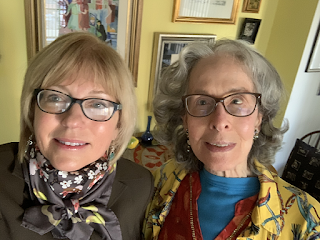
Susan Nash and Rochelle Owens, November 2021

Patterns of Animus Part 4 Carnal / Spiritual takes quotes from Dostoyevsky ("How can you live and have no story to tell?") and the presence of a cosmic-level tapeworm as points of departure; together they posit an alternative mechanism for the functions of the universe. Instead of constantly expanding and growing, Owens introduces the notion of the tapeworm.  It’s interesting to think of the universe dominated by a tapeworm mechanism: parasitically feeding off the energy of its host, and ultimately killing the host (and thus, that part of the cosmos, or perhaps all of it) a postulated end of time, end of the universe. The tapeworm is greedy, eternally hungry, and ultimately grows to enormous size and length in the gut of its host. 

It's not unusual to see an ouroboros in literature, especially Medieval and Renaissance literature, where the snake swallowing its tail causes the snake to metamorphose into another snake with completely different patterns and aspect. The ouroboros had symbolic significance in Ancient Egypt and denoted the transmigration of souls.  For medieval and Renaissance writers who delved into topics of alchemy and mystical practices, the ouroboros represented the transformation of worthless substances into gold. The tapeworm is a kind of anti-ouroboros, capable of sucking in, but instead of entering a sheltering, warm womb, nothing grows, and nothing transforms itself into something else. The tapeworm devours without producing anything except an insatiable hunger. The tapeworm eventually kills the host by completely coopting the digestive system. Anything eaten feeds the tapeworm. Nothing is left over for the pitiful and pitiable host. The image that comes to mind is of a cow in a field, ribs and hipbones protruding, looking like a skeleton draped with hide. The cow is eating grass, chewing, chewing, and chewing, trying to curb her hunger – ultimately a lethal hunger, because the more she eats, the more she feeds the tapeworm. The tapeworm would be a comfortable metaphor for consumer culture, but in Rochelle’s hands, its vaster, horror-inducing, and perfectly sublime (as described by Edmund Burke). 

As an essential cosmological mechanism and unseen presence in the universe, Owens’s construction of the tapeworm opens the mind up to really intriguing (and horrific) ideas and images. First, one might say that the mechanism is appropriate – after all, we have detected the presence of black holes.  What if they are simply mouths of the multiple tapeworms that riddle the universe? They suck up the energy. We have mathematically explained it with models in astrophysics that suggest that stars expand but only to a point, and then they implode. I don’t understand how the extreme gravitational pull is explained by physics. I thought one had to have a tremendous amount of mass in order to have a gravitational pull. Perhaps the mass is there, but is in a long-term process of compression and collapse, and perhaps that is what drags in the nearby “nutrients” (light, moving objects, etc.).  How would that process relate to a tapeworm? A tapeworm has two orifices: the gaping mouth that ushers nutrients into its “filthy maw” (to quote Spenser in The Faerie Queene), and its back orifice, its anus.  Perhaps there are eruptions in the cosmos that correlate to the tapeworm mechanism’s outpourings of waste products. I don’t know. It’s a fascinating, mind-expanding mental exercise to envision it. 

In Owen’s study, next to the computer where she works on her poems, there is a window that provides a view of a corner and a lovely little tree, which Rochelle has observed with concern and outpourings of well wishes for its health.  She also has a Merck’s manual which contains a lengthy entry on tapeworms. 

There is an essential horror in the concept of a massive cosmic tapeworm. It makes the Dune sandworms look like Silly String. Intrusive thought -  Do you remember Silly String?  I don’t know if it is still being manufactured – it was something you would spray from a can, and it would come out as thin strings of plastic.  I’m not sure what the entertainment value really was, but I remember being in a Silly String war. It was fun to spray over plants as a kind of decoration. It was probably toxic and highly flammable.  I am just guessing, though. 

I can imagine Owens’s cosmic tapeworm as a fundamental, thumpingly insistent expression of a rap song, with its dark chord progressions and even darker lyrics. The yawning, filthy mouth, the devourer of its host is actually a pretty good metaphor for the dark songs of classic 1990s group Tool as well. I don’t know what that genre of rock is called, but it definitely fills one with existential gloom, and at times, horror. 


Still Life: Rochelle Owens

A brilliantly clear day in Philadelphia

Susan Smith Nash
Susan Smith Nash, photo by Rochelle Owens


Saturday, January 02, 2021

The “Animus” Required of a Poetics: On a Recent Poem Series by Rochelle Owens

Rochelle Owens consistently challenges the reader's perspective with her plays, poetry, and videos that relate to her work: Futz!, Black Chalk, How Much Paint Does the Painting Need?, Oklahoma Too. 

Literary critic and scholar Brian McHale argues that the primary difference between Modernism and Postmodernism is that Modernism is concerned with constructing vast, new epistemological frameworks, while with Postmodernism, there is no longer any belief in the efficacy of knowledge systems to represent the world.  Instead, Postmodernism’s primary conceit is that of a challenge to beingness and the unavoidable processes of disintegration to be followed by re-integration. 

Award-winning and trail-blazing poet and playwright Rochelle Owens (latest book, The Aardvark Venus)  captures the two often oppositional processes in her work.  On the one hand, her weaving, incantatory rhythms and the reflexive nature of her subject matter, clearly take on the constructive act of developing the poem’s own epistemology.  On the other, however, she often dismantles the very episteme she has built, and as it is torn down, she replaces it with the process of becoming.  In some cases, the “becoming” process starts as an “undoing” or dismantling.  

There may be images and processes that allude to dissection, dismembering, putrefaction (as in Black Chalk (1994)), or they can allude to a destructive, nutrient-robbing parasite (the tapeworm in “Chomsky Grilling Linguica (Part 2)) https://newversenews.blogspot.com/2006/04/chomsky-grilling-linguica-part-2.html . But, by the end, the ontological destabilization turns into a regenerating process that explores how language and poetics model the creative act; more specifically, the freedom enjoyed in the re-assembling of language and signification.    

Owens’s latest work, “Patterns of Animus,” (https://jacket2.org/commentary/patterns-animus) specifically addresses the issues surrounding how the poet represents knowledge and knowing.  The poem begins with the image an etched piece of metal.  The engraver creates an etching that has “geometric form” and is “fatal the design. However, the action of writing and inscribing, or etching, is a work of construction of meaning. The construction occurs when the letters are formed, and that gives rise to the possibility of signification. 

The artist continues to engage in the act of etching, which reinforces idea of signification-in-the-making and meaning that can arise from the actions.  The “animus” brings together a great desire to create, but also suggests a base-level hostility that may be necessary for true art to be created.  

The engraver is inscribing something that stays just outside the reader’s view, which gives it the ability to take on many forms at the same time and to create in the reader’s own mind, the notion of the reader’s own epistemological framework that rises up like a Fata Morgana, the startling weather phenomena that results in mirages resembling complex castles and structures.

In the engraving process one cannot help but think of other acts of generative classifiable ways of seeing and cataloging. The Marquis De Sade comes to mind because his subversive world which is in essence a destructive mirror: an anti-world.

The artist cuts or burns his way through to a new world order and a new system of organizing perception and in doing so creates a sense of permanence by cutting into the metal in a way that the message or the series of signs are permanent and not easily erasable. But instead of metal, he could, like Kafka’s Commandant, invent “The Harrow” to dig into The Condemned Man’s head. The artist, so enchanted by the ability to write, inscribe, or etch, may be oblivious to the fact that the function is violent and will ultimately kill The Condemned Man.  In “Patterns of Animus,” art is likewise consigned to the service of signification, but it is not, as in Kafka, done to remind the condemned of their transgressions.  Instead, Owens reminds the reader of the potential to create.

In contrast to the act of inscribing and etching and of creating a system of knowledge, in Part II of “Patterns of Animus,” the body of a woman (the “dead paysanne”) floats in a swamp, and as it does so, decomposes. Is the “dead paysanne” like the drowned prostitute used by Caravaggio as a model for the Virgin Mary for his painting, “Death of the Virgin” (1606)?   

The paysanne is heavily imbued with signification because she embodies a taboo or a limit to the structure in which people find their roles. That body is potentially a victim, or simply a receptacle of transition as it lies in a swamp and decomposes. The body transmits a message metaphorically because of social constructs (in the case of Caravaggio, the drowned prostitute was used to represent the Virgin Mary).  The body has meaning simply because of the action of the observers and their socially constructed reality. 

However, the body of the dead paysanne is lying in the swamp and it is decomposing, a condition of being (or “unbecoming”) that triggers a process by which all the signification starts to change. One becomes very aware that the meaning system and the concerns of the text have to do with ontological anxieties and ontological instability: the center does not hold. The central concern of the poem transitions to questions of being, beingness, becoming, and their inversions, “unbecoming.” The “dead paysanne” floats in a swamp and the physical changes brought on by “microscopic algae” suggest an unraveling of being and by extension, a poetics of “un-becoming.”  The rather horrifying mental image of a body being broken down by natural processes gives rise to an extended metonymy, and a mechanism by which one can address how the poet subverts traditional values. The restrictive belief systems become turgid, followed by the burbling degassing of values (and of meaning).  

On a larger scale, one can’t help but think of videos of a dead whales that wash up onto beaches, their putrefaction gases building up in their bellies, causing consternation to the communities. Eventually, they explode, resulting in a rain of rotting whale carcass parts. (There was a case in Oregon:  https://youtu.be/thFWlDSu8iM and in Newfoundland: https://youtu.be/bQ6Y2TswxlY.  The granddaddy of them all took place in Florence, Oregon, in 1970, where Oregon Highway Division decided to have a “controlled demolition” with twenty cases of dynamite https://youtu.be/ax7kENH-A7s . It did not go as hoped.).  On a smaller scale, the explosion only bursts the belly of the dead whale, allowing the entrails to slide out as though alive: https://youtu.be/RzB2E9fgMHY. 

If the “dead paysanne” has a parallel with Caravaggio’s dead prostitute who was used as a model for “The Death of the Virgin,” there is another level of ontological insecurity, which has to do with being judged for one’s status in society.  She drowned. Was she murdered? If so, the notion of murder reminds one that certain people within a social construct are those relegated to be the trigger of change.

If the moving eye that moves along the “jagged black line” represents the epistemological framework in a world, the rotting corpse of the murdered prostitute lying in a swamp is representative of the ontological insecurity of the world and an essential fragility that points to the provisional nature of being and beingness. And, in this fragile world, “animus” – with all its contradictory suggestions – is a requisite condition for the creation of a poetics. 

Works Cited

Kafka, Franz. “In the Penal Colony.” Franz Kafka Online. 2007.  https://www.kafka-online.info/in-the-penal-colony-page4.html 

Owens, Rochelle.  “Chomsky Grilling Linguica” TheNewVerseNews. 15 March 2006. https://newversenews.blogspot.com/2006/03/chomsky-grilling-linguica.html 

_____  “Patterns of Animus” Jacket2: 24 September 2020 https://jacket2.org/commentary/patterns-animus 

Questions? please contact Susan Smith Nash, Ph.D.

texturepress@beyondutopia.com 


Blog Archive